
Accessible Audio Resources for Visually Impaired Patients: Essential Tools for Healthcare
 Dec, 15 2025
Imagine trying to understand your diabetes treatment plan when every instruction is printed on paper. Or walking into a hospital for the first time without knowing where the lab is, the pharmacy, or even the bathroom. For the 7.6 million Americans with vision loss that affects daily life, this isn’t hypothetical-it’s everyday reality. But it doesn’t have to be. Audio resources are changing that. They’re not just nice-to-haves. They’re lifelines.
Why Audio Matters in Healthcare
When you’re blind or have low vision, reading a consent form, understanding medication labels, or following discharge instructions becomes impossible without help. That’s where audio comes in. It’s not about replacing sight-it’s about removing barriers. The law backs this up. The Americans with Disabilities Act, Section 504, and the Affordable Care Act all require healthcare providers to offer auxiliary aids, including audio materials. It’s not optional. It’s mandatory.But it’s more than legal compliance. Studies show that when audio resources are available, medication errors drop by 2.3 times. Patient satisfaction jumps 28%. Adherence to appointments and treatment plans improves. One diabetic patient avoided a hypoglycemic emergency in 2022 because her audio recording of insulin instructions was ready when her printed sheet was smudged. That’s not luck. That’s good design.
Top Audio Tools Used Today
There’s no single tool that works for everyone. Different needs demand different solutions. Here’s what’s actually being used in clinics and homes right now.- BARD Mobile by the National Library Service for the Blind is free for eligible users. It offers over 120,000 audiobooks, including medical guides, drug handouts, and condition-specific content. Updated daily. Works on iOS and Android. No subscription. Just proof of vision loss.
- Voice Dream Reader costs $29.99 but turns any digital text into speech-emails, PDFs, web pages, even scanned documents. Supports 100+ voices and 30+ languages. Used by patients who need to read their own lab reports or doctor’s notes aloud.
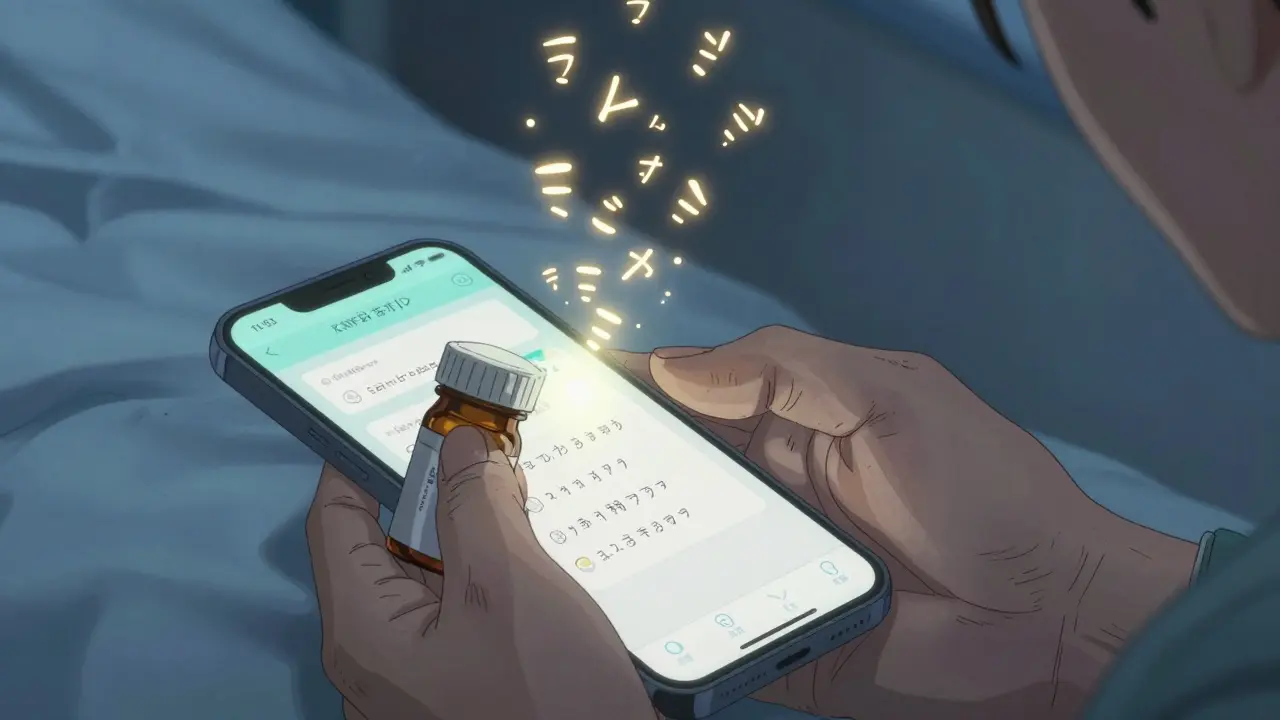
- KNFBReader ($99) scans printed text like pill bottles or appointment slips and reads them instantly. Accuracy is 98.7% on iOS devices. Takes less than three seconds. Perfect for patients who still get paper mail from insurers or pharmacies.
- RightHear Talking Signage uses Bluetooth beacons in hospitals to guide users with audio cues. Say you’re in a 200,000 sq. ft. hospital. Walk toward the elevator. Your phone whispers, “Elevator ahead, turn left in 10 feet.” No internet needed. Johns Hopkins Hospital saw a 47% drop in staff assistance requests after installing it.
- CRIS Radio and Spectrum Access are free, nonprofit services that stream health education talks, interviews with doctors, and patient stories. Great for background listening while cooking or commuting.
These aren’t gadgets. They’re part of a patient’s daily care routine-like a stethoscope or a blood pressure monitor.
What Hospitals Are Getting Right (and Wrong)
Some hospitals are ahead of the curve. St. Jude’s implemented VisionConnect™, a custom audio system that reads out appointment details, medication schedules, and directions. One user tracked their confusion levels before and after: dropped from 67% to 12%. That’s life-changing.But most aren’t there yet. A 2024 survey by the National Federation of the Blind found that 63% of visually impaired patients face inconsistent access. One clinic gives you an audio CD. Another expects you to download an app. A third says, “We don’t have that.”
Staff don’t always know what’s available. In a 2023 survey, 58% of patients said nurses or receptionists couldn’t tell them how to get audio materials. That’s a training failure. It’s not the patient’s job to explain accessibility. It’s the hospital’s job to provide it.
And quality matters. Some hospital-recorded audio is slow, robotic, or poorly edited. One patient described a medication recording that sounded like a “glitchy voicemail.” That’s worse than no audio at all-it breeds distrust.
Costs and Accessibility
You might think these tools are expensive. But many are free. BARD Mobile? Free. CRIS Radio? Free. Braille Institute’s audio library? Free if you qualify.Commercial tools like Voice Dream Reader or KNFBReader cost money, but they’re often covered by Medicaid, private insurers, or nonprofit grants. Medicare now covers audio description services for certified visually impaired beneficiaries since January 2023. That’s a big shift.
Still, affordability isn’t the only hurdle. Digital literacy is. Only 43% of visually impaired adults over 65 feel comfortable using smartphone apps. That’s why some hospitals pair audio tools with in-person support. A staff member walks a patient through setting up BARD Mobile. That’s not extra work-it’s essential care.
What’s Coming Next
The future is already here. The 21st Century Cures Act requires all electronic health records to include audio output by December 2024. That means your doctor’s notes, lab results, and prescriptions will soon be readable by your phone-no printing needed.Mayo Clinic is testing AI that summarizes your medical record into a short, personalized audio summary. Instead of listening to 30 minutes of doctor’s notes, you get: “Your blood pressure is high. Start taking lisinopril 10mg daily. Avoid salt. Next appointment: March 12.”
And by 2025, CMS plans to require real-time audio translation for non-English speaking visually impaired patients. Imagine a Spanish-speaking patient with glaucoma getting their treatment plan in clear, spoken Spanish through their phone-no interpreter needed.

How to Get Started
If you’re a patient:- Ask your provider: “Do you offer audio versions of your materials?”
- Apply for BARD Mobile through your local Braille Institute or NLS office. You’ll need a doctor’s note confirming vision loss.
- Download Voice Dream Reader or KNFBReader if you need to read your own documents.
- Ask if your hospital uses RightHear or similar wayfinding tools.
- If they say no, ask for the accessibility coordinator. They’re required by law to help you.
If you’re a healthcare worker:
- Check your facility’s communication access plan. If you don’t have one, start one.
- Train your staff on what audio tools exist and how to refer patients to them.
- Test your audio files with a screen reader. If it doesn’t work, fix it.
- Partner with local organizations like Lighthouse Guild or the American Foundation for the Blind. They’ll help you set up systems.
Final Thought
Accessible audio isn’t charity. It’s care. It’s dignity. It’s the difference between confusion and confidence. Between missed doses and proper treatment. Between feeling alone and feeling seen.Every patient deserves to understand their health. No matter how they see the world.
Are audio resources for visually impaired patients really required by law?
Yes. Under the Americans with Disabilities Act (ADA), Section 504 of the Rehabilitation Act, and the Affordable Care Act, healthcare providers must offer auxiliary aids-including audio recordings, screen reader-compatible files, and real-time audio assistance-to ensure effective communication. Failure to comply can result in legal action and loss of federal funding.
What’s the best free audio resource for medical information?
BARD Mobile, run by the National Library Service for the Blind and Physically Handicapped, is the most comprehensive free option. It offers over 120,000 audiobooks, including medical handouts, drug guides, and condition-specific education materials. It’s free for eligible users who provide proof of vision loss through a certified professional.
Can I use my smartphone to read medical documents aloud?
Yes. Apps like Voice Dream Reader and KNFBReader let you scan printed documents-prescriptions, lab results, insurance letters-and have them read aloud. Voice Dream Reader works with PDFs and web pages, while KNFBReader specializes in scanning text from physical paper. Both work best on newer iPhones and Android devices.
Why do some hospitals still not offer audio materials?
Many hospitals lack awareness, training, or funding. Even though the law requires it, staff often don’t know what tools exist or how to provide them. Some assume printed materials are enough. Others don’t have a budget for audio systems. But patient surveys show that 63% of visually impaired patients face inconsistent access-meaning this is a widespread gap, not an isolated issue.
How can I check if a hospital is accessible?
Call ahead and ask: “Do you offer audio versions of your forms, instructions, and appointment reminders?” Ask if they use tools like RightHear for indoor navigation or have BARD Mobile available. If they hesitate or say no, ask to speak with their accessibility coordinator. Under federal law, they’re required to have one.
Is there help for older adults who aren’t tech-savvy?
Yes. Many nonprofits, like the Braille Institute and Lighthouse Guild, offer free one-on-one training to help older adults set up audio tools. Some hospitals assign patient navigators to walk patients through downloading apps or using screen readers. Audio resources don’t require you to be a tech expert-they’re designed to work with your needs, not against them.
Meghan O'Shaughnessy
December 17, 2025 AT 07:14My mom uses BARD Mobile every morning while she makes coffee. She says it’s the first thing that makes her feel like she’s not invisible in the system. No one ever asks if she needs it. She just has to ask. And now she’s the one reminding her doctors to send audio copies.
It’s not magic. It’s just basic human decency.
Kaylee Esdale
December 18, 2025 AT 17:35Audio isn’t a perk. It’s oxygen. When your world is silent because the paper won’t talk back, you don’t ask for help-you survive on grit. Tools like KNFBReader don’t just read pills-they read dignity. And hospitals? They’re still asleep at the wheel.
Philippa Skiadopoulou
December 19, 2025 AT 22:43It is a legal obligation under the ADA and Section 504 to provide auxiliary aids. The data on reduced medication errors and improved adherence is robust. Institutions that fail to implement audio resources are not merely neglectful-they are in violation of federal civil rights law. Compliance is non-negotiable.
Jonathan Morris
December 20, 2025 AT 08:23Let’s be real-this whole audio push is just a distraction. The real issue is that hospitals are overmedicating people and using tech as a cover-up. Who’s funding these apps? Big Pharma? The government’s using screen readers to hide the fact that they’re pushing dangerous drugs on seniors. Look at the timeline-right after Medicare started covering audio, opioid prescriptions spiked. Coincidence? I think not.
Linda Caldwell
December 21, 2025 AT 07:09Y’all. This. This right here is the kind of change that saves lives. I cried reading this. My cousin almost went blind from diabetes because no one told her how to use insulin. Now she uses Voice Dream Reader and she’s got her life back. Tell your doctors. Tell your reps. Tell your cousin’s nurse. This isn’t optional. It’s everything.
CAROL MUTISO
December 21, 2025 AT 23:39Oh wow, so we’re pretending that ‘audio resources’ are some revolutionary breakthrough when the real problem is that hospitals treat disabled people like afterthoughts? Let me guess-the same folks who can’t find a braille menu also think ‘accessibility’ means putting a button on a webpage labeled ‘text-to-speech’ and calling it a day. How poetic. We’re not asking for miracles. We’re asking for basic competence. And yet, here we are.
Donna Packard
December 22, 2025 AT 14:54I’ve seen this work firsthand. A friend of mine with macular degeneration got her first audio prescription label last year. She said it was the first time in years she didn’t feel scared to take her medicine. Small things. Big impact.
Patrick A. Ck. Trip
December 22, 2025 AT 18:09i just wanted to say this is really important work. i dont know much about tech but i know that when people cant understand their health info its not just a problem its a crisis. hospitals should be doing more. and i think we should all push them to. thank you for sharing this.
Sam Clark
December 23, 2025 AT 09:50Effective communication is a cornerstone of patient-centered care. The integration of audio-based auxiliary aids not only fulfills statutory obligations under federal civil rights legislation but also significantly enhances clinical outcomes. I strongly encourage healthcare institutions to institutionalize these practices through formal policy, staff training, and continuous quality assurance protocols.
Jessica Salgado
December 24, 2025 AT 18:14Wait-so you’re telling me there’s a free app that reads your pill bottle? And hospitals don’t even tell people about it? I’m not mad. I’m just… disappointed. Like, how is this not in every ER brochure? How is this not the first thing you’re handed when you walk in? This isn’t tech. This is basic. And yet here we are. Again.
Sachin Bhorde
December 26, 2025 AT 09:26bro this is lit. i work in a clinic and we just got KNFBReader last month. old folks love it. one guy scanned his insurance letter and cried-he hadn’t understood it in 3 years. no cap. also, BARD is fire. free audiobooks on diabetes, heart stuff, even mental health. if your doc dont know about it, tell em. they prolly dont.
Joe Bartlett
December 26, 2025 AT 15:20Why are we even talking about this? In the UK we’ve had this for decades. NHS has audio leaflets, talking prescriptions, even voice-guided hospital maps. Americans still act like it’s a new idea. It’s not. It’s just laziness.
Naomi Lopez
December 28, 2025 AT 01:34It’s fascinating how we’ve elevated ‘audio resources’ to the level of moral imperative while ignoring the deeper structural failures of healthcare inequity. This feels performative. Like we’re patting ourselves on the back for offering audiobooks while the system still denies people basic housing, nutrition, and transportation. Is this really the best we can do?
Evelyn Vélez Mejía
December 29, 2025 AT 09:40Accessibility is not a feature. It is the architecture of justice. When we design for those who see differently, we reveal the blindness of the system itself. The fact that we need apps to read pill bottles means our world was never meant for everyone. But now, we are rewriting the code-not with pixels, but with voice. And that, my friends, is revolution.
Victoria Rogers
December 29, 2025 AT 18:54soooo… this is just another woke tech scam. who’s really benefiting? the devs selling apps? the hospitals avoiding lawsuits? meanwhile, my aunt got her audio CD and it was recorded by a robot that sounded like a drunk toaster. no thanks. i’ll keep reading my own damn papers.