
Balance Rehabilitation: Vestibular Exercises to Prevent Falls and Regain Stability
 Jan, 19 2026
Every year, one in three adults over 65 falls at least once. For many, it starts with a subtle wobble on uneven pavement, a sudden spin when rolling over in bed, or feeling off-balance while walking through a crowded store. These aren’t just accidents-they’re signs your vestibular system, the part of your inner ear that tells your brain where you are in space, isn’t working right. And the good news? You don’t have to live with it.
What Is Vestibular Rehabilitation Therapy?
Vestibular rehabilitation therapy, or VRT, isn’t magic. It’s science. Developed in the 1980s by physical therapists who noticed patients could relearn balance after inner ear damage, VRT uses targeted exercises to help your brain adapt to changes in your balance system. It doesn’t fix the damaged inner ear. Instead, it teaches your brain to rely on other cues-your eyes, your muscles, your sense of touch-to make up for what’s lost.
This isn’t just for older adults. People with benign paroxysmal positional vertigo (BPPV), Meniere’s disease, vestibular neuritis, or even post-concussion dizziness benefit. Studies show VRT improves gaze stability by 68%, balance by 73%, and reduces nausea by 42%. For many, headaches drop by 37%. The goal? To get you back to walking without fear, reading in the car, or turning your head without the room spinning.
How VRT Works: The Brain’s Hidden Ability to Relearn
Your vestibular system is like a GPS that’s lost its signal. When it’s damaged, your brain gets conflicting messages: your eyes say you’re still, your inner ear says you’re spinning, your feet feel unsteady. That’s when dizziness, nausea, and the fear of falling kick in.
VRT works because your brain is adaptable. Neuroplasticity-the same process that lets stroke patients relearn speech-lets your brain rewire how it interprets balance signals. The exercises force your brain to pay attention to the right cues and ignore the noisy ones. It’s like training a faulty radio to tune into a clearer station.
There are four core goals:
- Improve gaze stability (keeping your vision steady when your head moves)
- Improve postural stability (standing and walking without swaying)
- Reduce vertigo and dizziness
- Restore daily activities-shopping, cooking, climbing stairs
And it works even if you’ve had symptoms for years. Age doesn’t matter. Neither does how severe the damage is. The only requirement? Consistency.
The Core Exercises: What You’ll Actually Do
VRT isn’t about lifting heavy weights or running marathons. It’s about controlled, repetitive movements that gently challenge your balance system. You’ll do these at home, several times a day, in short bursts-no gym needed.
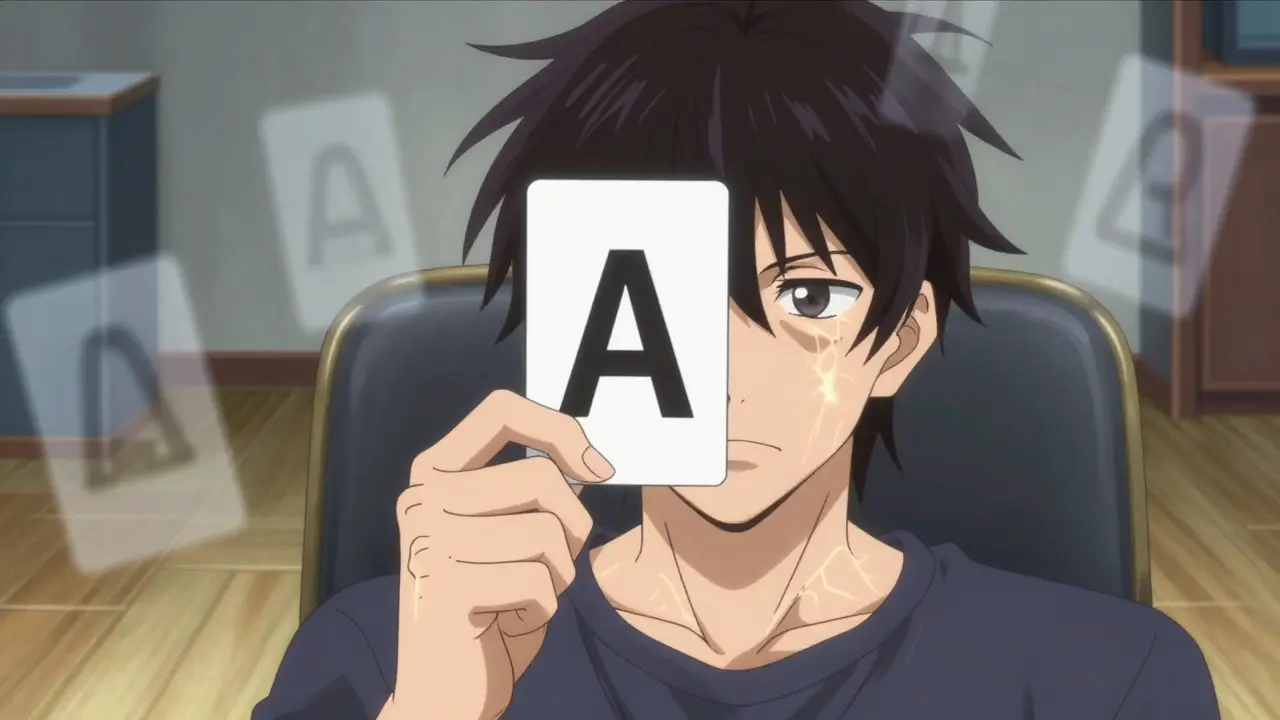
Gaze stabilization is the most common starting point. Sit in a chair, hold a card with a letter or small picture at eye level. Focus on it. Now, slowly move your head side to side or up and down, keeping your eyes locked on the letter. Start slow. If you feel dizzy, that’s okay-it means it’s working. Over time, your brain learns to keep your eyes locked even when your head moves.
Balance retraining starts simple: stand with both feet together, eyes open. Then, try it with eyes closed. Next, stand on one foot. Then, stand on a folded towel. Progress to standing while tossing a ball from hand to hand. These aren’t just balance drills-they’re teaching your body to use your feet, ankles, and core to stay upright without relying on your inner ear.
Habituation exercises are for when certain movements trigger dizziness-like turning your head quickly or walking past a busy storefront. You’ll repeat those movements on purpose, in a controlled way, until your brain stops overreacting. One patient said she used to avoid grocery stores because the fluorescent lights and moving aisles made her dizzy. After six weeks of habituation drills, she walked through one without a single wobble.
Walking exercises include walking while turning your head, walking backward, walking on uneven surfaces like grass or gravel, and walking in low light. These mimic real-life challenges and train your body to adapt.
And yes-neck mobility matters. Tight neck muscles can worsen dizziness. Gentle stretches help reduce tension that throws off your balance signals.
How Long Until You Feel Better?
Most people start noticing small improvements within two to three weeks. But real change takes time. The average program lasts 6 to 8 weeks, with 1-2 supervised sessions per week and 3-5 home sessions daily. Each session is just 5-10 minutes long.
One Reddit user, who fell 3-4 times a week before starting VRT, reported zero falls after 12 weeks. Another said she could finally read on a moving bus-something she hadn’t done in five years because of oscillopsia (the world appearing to bounce).
But here’s the catch: skipping days slows progress. Avoiding dizziness makes it worse. The more you run from the feeling, the longer it lasts. The key is to face it-gently, safely, and regularly.
Who Can Benefit? And Who Shouldn’t Try This?
VRT helps nearly everyone with a vestibular disorder, regardless of age or how long symptoms have lasted. It’s especially critical for older adults. In the UK, over 65% of people over 65 experience dizziness. One in three falls each year. VRT reduces fall risk by up to 53%-more than any medication.
It’s not for everyone, though. If you have an active inner ear infection, a recent stroke, or severe heart disease, you need medical clearance first. VRT is safe, but it’s not a DIY self-treatment for undiagnosed dizziness. See a specialist first. A vestibular therapist will assess your condition and design a plan that fits your needs.
And no, you don’t need expensive gear. No VR headsets, no balance boards. Just a chair, a wall, and a little courage.

Why VRT Beats Medication and Surgery
Many doctors still prescribe anti-nausea pills or sedatives for dizziness. These mask symptoms but don’t fix the root problem. They can make you groggy, increase fall risk, and don’t help long-term.
Surgery? Reserved for extreme cases like severe Meniere’s. It’s invasive, risky, and not always effective.
VRT? No drugs. No incisions. Just your brain relearning how to work with what it’s got. It’s cheaper, safer, and more effective. A single fall can cost over £10,000 in medical bills. VRT costs a fraction of that-and prevents the fall entirely.
Getting Started: What to Do Next
If you’ve been feeling unsteady, dizzy, or afraid to walk without holding onto furniture, here’s your next step:
- See your GP or an ENT specialist. Ask for a referral to a vestibular physiotherapist.
- Ask if your local hospital or clinic offers VRT. Major centers like Penn Medicine, Princeton Sports Medicine, and Texas Health Resources have established programs.
- Once you start, stick with it. Do your exercises even on days you feel okay.
- Track your progress. Note how many times you feel dizzy each day, what triggers it, and what activities you can now do that you couldn’t before.
And don’t wait. The longer you delay, the more your brain learns to rely on fear instead of balance. Recovery isn’t about strength-it’s about rewiring. And your brain is ready.
Real Change Starts With One Step
Balance isn’t something you’re born with. It’s something you maintain. And when it’s broken, it can be rebuilt.
VRT isn’t a cure-all. But for millions of people-those who stopped going out, stopped driving, stopped living-it’s the path back. Not because they got lucky. Not because they had the best doctor. But because they showed up, day after day, and did the exercises-even when it was hard.
You don’t need to be fit. You don’t need to be young. You just need to start.