
Coping Strategies for Long-Term Chronic Medication Use: What Actually Works
 Dec, 21 2025
Taking a pill every day for years isn’t just a habit-it’s a lifeline. For millions with conditions like high blood pressure, diabetes, rheumatoid arthritis, or heart failure, medication isn’t optional. It’s survival. But here’s the hard truth: medication adherence drops off fast. Studies show that by the end of the first year, nearly half of people stop taking their meds as prescribed. Not because they’re lazy. Not because they don’t care. But because it’s exhausting. Overwhelming. Emotionally draining.
Why Long-Term Medication Use Feels Like a Second Job
Think about your routine. Waking up, coffee, commute, work, dinner, laundry, kids, sleep. Now add: morning pills, afternoon pills, evening pills, special instructions, refills, side effects, doctor visits, insurance hassles, cost worries. It’s not just a list. It’s a mental load. And over time, that load crushes motivation. You’re not alone. A study of 120 people with rheumatoid arthritis found only 52.5% took every dose as directed after a year. That’s barely more than half. And it’s not about willpower. It’s about how your brain and body respond to constant demands. The brain starts to tune out. The body gets tired. The fear of side effects grows. The cost feels unbearable. The pills become symbols of illness-not health.The Five Coping Strategies That Actually Move the Needle
Research from a 2022 review of 15 studies across chronic illnesses shows five main ways people cope. Not all work equally. Some help. Some hurt. Here’s what the data says:- Problem-solving / active coping: This is the gold standard. People who actively figure out solutions-like using pill organizers, setting phone alarms, or talking to their pharmacist about cheaper options-had an 78% success rate in sticking to their meds. They don’t wait for things to get easier. They make them easier.
- Emotion-focused coping: This means managing the stress, fear, or sadness that comes with long-term illness. Journaling, meditation, talking to a friend, or even listening to music while taking pills. This worked well for 69% of people in studies. It doesn’t fix the problem, but it makes the burden lighter.
- Seeking understanding: Asking questions. Reading reliable info. Understanding why the drug matters. People who knew how their meds worked were more likely to take them. Knowledge reduces fear.
- Support seeking: Talking to family, joining a patient group, or getting help from a nurse or pharmacist. People who had even one person they could call when they were stuck were more consistent. Isolation kills adherence.
- Problem avoidance: Ignoring the pills, pretending they’re not needed, or delaying refills. This strategy showed negative results in half the studies. In some cases, it helped-usually when someone was overwhelmed and needed a short break. But long-term? It backfires.
What Doesn’t Work (And Why)
Avoidance sounds like a shortcut. Skip a dose today. You’ll catch up tomorrow. But the body doesn’t work that way. Blood pressure spikes. Blood sugar rises. Inflammation flares. One missed dose isn’t a mistake-it’s a ripple. And here’s the hidden trap: blaming yourself. “I should be stronger.” “I’m failing.” That guilt makes you avoid the pills even more. It’s a loop. The more you feel like a failure, the harder it is to pick up the bottle. A study on neurological patients found that people who felt ashamed of needing meds were less likely to take them. Shame doesn’t motivate. It paralyzes.
Team-Based Care: The Secret Weapon Most People Don’t Know About
The CDC found something surprising: when patients got care from a team-doctor, pharmacist, nurse, social worker-adherence jumped from 74% to 89% after a year. That’s not magic. That’s structure. Pharmacists don’t just hand out pills. They:- Check for drug interactions you didn’t know about
- Find cheaper generics or patient assistance programs
- Help you simplify your regimen-combine pills, switch to once-daily versions
- Call you for refill reminders
Real-Life Tactics That Work (No Fluff)
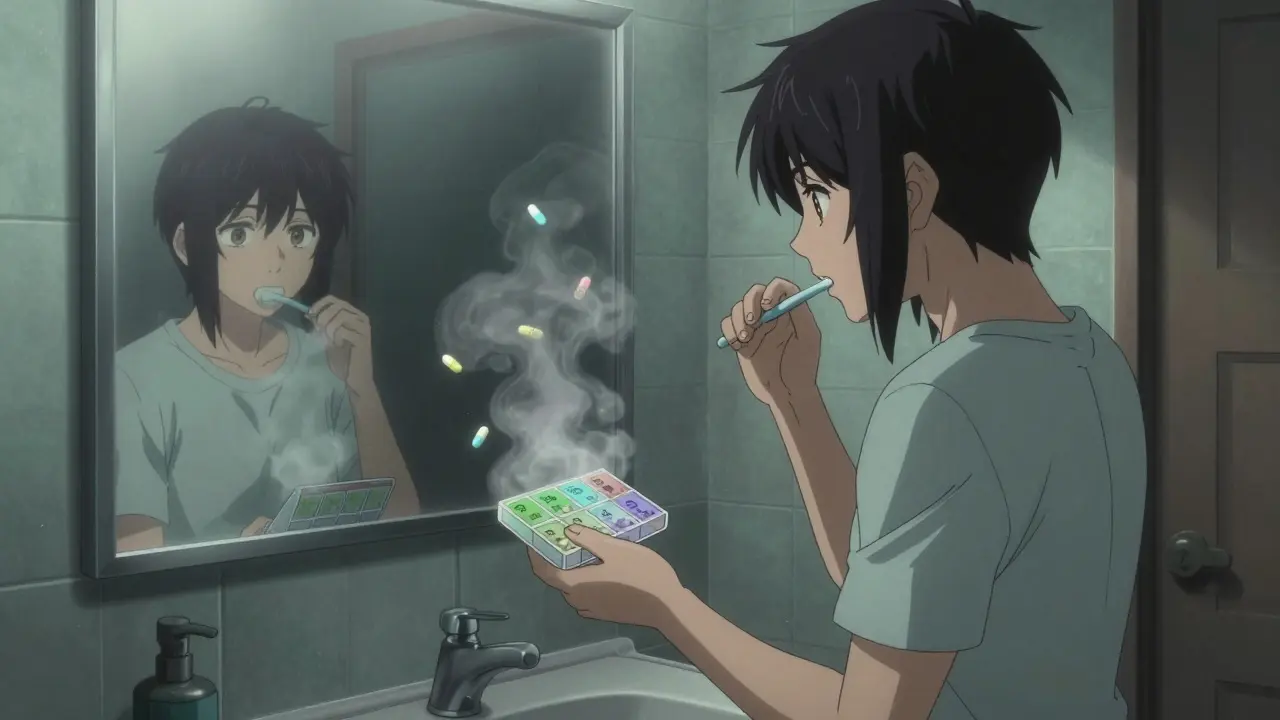
Here’s what works in real life, based on what patients actually do:- Anchor your pill to a habit: Take your morning meds right after brushing your teeth. Night pills after washing your face. Your brain links the action to the routine.
- Use a pillbox with days and times: Don’t guess. See it. Fill it weekly. If it’s full on Friday, you know you missed Tuesday.
- Set two alarms: One at the right time. One 30 minutes later. If you miss the first, the second catches you.
- Call your pharmacy for refill alerts: Most pharmacies now text or call when your script is ready. Sign up.
- Ask your doctor for a 90-day supply: Fewer trips. Fewer refills. Less chance of running out.
- Use RxAssist.org or similar programs: If your meds cost too much, you’re not failing-you’re in a broken system. These sites help you find free or low-cost meds.
Gender, Age, and Income: The Hidden Factors
It’s not just about coping. It’s about context. In the rheumatoid arthritis study, women were 4.5 times more likely to stick to their meds than men. Why? Not because women are “better” at it. But because they’re more likely to seek help, talk about symptoms, and prioritize health over stigma. Older adults and people with shorter disease duration also stuck with meds better. Why? Newer patients still feel the urgency. Older people have more routines built in. And income? It matters. If you’re choosing between meds and groceries, no coping strategy will fix that. That’s a policy problem-not a personal failure.
What to Ask Your Doctor (And When)
Don’t wait until you’re skipping doses. Bring this up at your next visit:- “Is there a simpler way to take these meds?”
- “Are there cheaper versions or assistance programs?”
- “Can we reduce the number of pills I take daily?”
- “Can you refer me to a pharmacist who helps with adherence?”
- “What happens if I miss a dose? Should I double up?”
The Bottom Line: You’re Not Broken
Long-term medication use isn’t about being perfect. It’s about being persistent. Some days you’ll forget. Some weeks you’ll feel defeated. That’s normal. What matters is that you keep trying. The best coping strategy isn’t the one that sounds smart on paper. It’s the one you can actually do. One alarm. One pillbox. One conversation with your pharmacist. One less pill in your regimen. You’re not failing because you’re weak. You’re human. And humans need support-not judgment.Frequently Asked Questions
What’s the most effective coping strategy for long-term medication use?
Problem-solving or active coping is the most effective. This means identifying barriers-like cost, complexity, or side effects-and actively fixing them. Examples include using pill organizers, setting alarms, asking your pharmacist for cheaper alternatives, or combining medications into one daily dose. Studies show 78% of people who use this approach stick to their meds better.
Why do I keep forgetting my pills even though I care about my health?
It’s not about motivation. It’s about cognitive load. Taking multiple pills daily, remembering schedules, managing side effects, and dealing with insurance creates mental fatigue. Your brain starts to tune out. That’s why simple tools like pillboxes, phone alarms, and habit-stacking (linking pills to daily routines like brushing teeth) work better than willpower alone.
Can I stop taking my meds if I feel fine?
No. Many chronic medications work silently-like blood pressure or cholesterol drugs. You won’t feel “better” because they’re preventing damage before symptoms appear. Stopping them can lead to sudden spikes in blood pressure, heart attacks, or strokes. Always talk to your doctor before making changes.
How do I talk to my doctor about not being able to afford my meds?
Say it directly: “I can’t afford this medication.” Doctors can help you find generics, patient assistance programs, or switch to lower-cost alternatives. Pharmacies also offer discount programs-ask your pharmacist. You’re not being rude-you’re being smart. Your health depends on it.
Are there free tools or apps that help with medication adherence?
Yes. Apps like Medisafe, MyTherapy, and Mango Health send reminders and track doses. Many pharmacies also offer free refill alerts via text or phone call. You can also use a simple paper pillbox or a calendar with stickers. The best tool is the one you’ll actually use-no app needed.
What if my side effects are too bad to keep taking the meds?
Don’t stop. Call your doctor. Many side effects fade after a few weeks. But if they don’t, there’s often another option. There are multiple drugs for most conditions. Your doctor can switch you to a different one with fewer side effects. Stopping without a plan is riskier than enduring temporary discomfort.
Does support from family really make a difference?
Yes. Studies show people who have even one person who checks in on them-reminding them, helping with refills, or just listening-are significantly more likely to stick to their regimen. You don’t need a team. Just one person who cares enough to ask, “Did you take your pills today?”
Tony Du bled
December 23, 2025 AT 10:51Been on blood pressure meds for 12 years. The pillbox and two alarms changed everything. No more guilt. Just routine. I don’t think about it anymore. It’s like brushing my teeth.
Charles Barry
December 24, 2025 AT 05:37Of course it’s exhausting-you’re being controlled by Big Pharma. They don’t want you cured, they want you addicted. That 78% success rate? Probably funded by pharmaceutical lobbyists. Wake up. The real solution is fasting, infrared saunas, and ditching all prescriptions. I’ve been off my meds for 3 years. My BP is better than yours.
Rosemary O'Shea
December 24, 2025 AT 23:49How utterly pedestrian. You’re reducing the profound existential burden of chronic illness to a checklist of behavioral hacks. Pill organizers? Alarms? How quaint. The real issue is the collapse of meaning in modern medicine. We’ve turned healing into a logistical puzzle solved by middle-class productivity porn. If you’re not weeping into your prescription bottle at least once a week, you’re not truly engaging with your mortality.
Sam Black
December 26, 2025 AT 04:19For me, it was finding a pharmacist who actually remembered my name. Not just the script. Me. She noticed I was skipping my statin and asked if I was scared of the side effects. Turned out I was. We switched brands. Cost dropped. I started taking it again. No magic. Just someone seeing me.
Jamison Kissh
December 26, 2025 AT 13:37What if the problem isn’t adherence but the assumption that chronic illness requires lifelong chemical intervention? We treat symptoms like enemies, not signals. Maybe the real coping strategy is re-evaluating why we’re on these drugs in the first place. Is it medicine-or socialized denial of lifestyle? I’m not saying stop the meds. But maybe question the system that makes them feel like a moral obligation.
Vikrant Sura
December 28, 2025 AT 01:22lol. This is why America is collapsing. People can’t even take a pill. Just get your shit together. I’ve been on 7 meds since I was 25 and never missed one. You’re weak.
Candy Cotton
December 29, 2025 AT 10:43As an American woman who has maintained perfect medication adherence for 18 years, I find it deeply offensive that this article implies systemic failure is an excuse. We are the greatest nation on earth. If you can’t afford your medication, you are not trying hard enough. Go to the VA. Get a second job. Buy generic. Stop whining. Your health is your responsibility.
Jeremy Hendriks
December 31, 2025 AT 03:04The pills are just symbols. The real disease is the modern condition of being perpetually monitored, scheduled, and medicated. We’ve outsourced our autonomy to pharmacies and algorithms. The fact that we celebrate ‘adherence’ as a virtue reveals how deeply we’ve internalized control. What if the cure isn’t taking more pills-but reclaiming the right to be imperfectly human?
jenny guachamboza
January 1, 2026 AT 09:06OMG YES!!! 🙌 I’ve been using Medisafe and it’s LIFE CHANGING!! 🤯 but also… did you know the government puts microchips in pills to track you?? 😳 I read it on a blog. I only take mine on Tuesdays now. Also my cat licks my pillbox and says she’s my spirit animal 🐱💕 #MedicationConspiracy #CatTherapy
Tarun Sharma
January 2, 2026 AT 03:07Thank you for this well-researched and thoughtful article. The emphasis on team-based care is particularly important. In my experience, structured support systems significantly improve outcomes. I recommend all patients engage with clinical pharmacists and social workers where available.
Gabriella da Silva Mendes
January 2, 2026 AT 09:02Okay but let’s be real-this whole thing is just capitalism’s way of keeping us docile. You think they want you healthy? No. They want you on meds forever so you keep buying them. And don’t get me started on the insurance companies. They make you jump through hoops just to refill a $2 pill. Meanwhile, my cousin in Canada gets all her meds free. We’re being exploited. And now we’re supposed to feel guilty for not being able to afford the price gouging? Nah. I’m done. I’m taking my pills… but only when I feel like it. And I’m not sorry.
Kiranjit Kaur
January 3, 2026 AT 07:19My mom has RA. She started journaling every time she took her meds-just one line: ‘Took my pills. Felt a little better.’ After six months, she said it stopped feeling like a chore and started feeling like a ritual. Not because it fixed her pain-but because she stopped fighting herself. That’s the quiet win. Not perfection. Just presence. 🌿
Jim Brown
January 5, 2026 AT 01:56The human condition is defined by the tension between biological necessity and existential fatigue. Medication adherence is not a behavioral failure-it is a metaphysical one. We are creatures who require structure to survive, yet rebel against the very systems that sustain us. The pillbox is a sacrament. The alarm, a bell calling us back to our mortality. To take the pill is to affirm: I choose to endure. And in that choice, there is dignity.
Sai Keerthan Reddy Proddatoori
January 5, 2026 AT 12:11This is why we can’t have nice things. Everyone is too soft. In my country, we take our medicine like men. No alarms. No pillboxes. No whining. If you forget, you die. That’s nature. You want to live? Be strong. Stop asking for handouts. This article is a waste of time.
Cara Hritz
January 5, 2026 AT 13:43Wait so you’re saying I should use a pillbox? But I have a phone… why not just use the reminder app? Oh wait I deleted it because I hate being nagged. Also I think my meds are making me sleepy. Maybe I don’t need them? 🤔