
Decoding Prescription Label Abbreviations and Pharmacy Symbols: What You Need to Know
 Jan, 3 2026
Have you ever looked at your prescription label and felt like you’re reading a secret code? You’re not alone. That tiny print with strange letters like q.d., o.d., or SC isn’t meant to confuse you - it was designed for speed. But in today’s healthcare system, those shortcuts can be dangerous. What looks like a quick note from your doctor could be a misread instruction that leads to the wrong dose, the wrong eye, or even a life-threatening mistake.
Why Do Prescription Labels Use Abbreviations?
Prescription abbreviations come from Latin. Centuries ago, doctors wrote in Latin because it was the universal language of medicine across Europe. The symbol Rx - the one you see at the top of every prescription - comes from the Latin word recipe, meaning "take." It’s been around since at least 1598. Back then, it made sense. Everyone in the medical field understood it. But today, we don’t all speak Latin. And we don’t all read handwriting the same way. A sloppy q.d. (daily) can look like q.i.d. (four times a day). A tiny U for units can be mistaken for a 4. That’s not just inconvenient - it’s deadly. The Institute for Safe Medication Practices found that nearly 7% of all medication errors in U.S. hospitals are tied to confusing abbreviations. That’s thousands of preventable mistakes every year.The Most Common Abbreviations (and the Mistakes They Cause)
Here are the abbreviations you’re most likely to see on your prescription - and what they really mean:- Rx = Take (not "prescription" - though that’s how most people think of it)
- p.o. = by mouth (from Latin per os)
- SC, SQ, SubQ = under the skin (subcutaneous)
- b.i.d. = twice daily (from Latin bis in die)
- t.i.d. = three times daily
- q.d. = once daily - but this one is risky. Many people misread it as q.i.d., leading to overdoses.
- o.d. = right eye (Latin: oculus dexter)
- o.s. = left eye
- a.d. = right ear
- a.s. = left ear
- PRN = as needed
- OTC = over-the-counter
- MS = morphine sulfate - but it could also mean magnesium sulfate. That’s a deadly mix-up.
- U = units - this is one of the most dangerous. It’s been linked to dozens of deaths from insulin overdoses.
Some of these are still used because they’re quick. But many are now banned in hospitals and pharmacies. The Joint Commission, which sets safety standards in the U.S., specifically says do not use: U, IU, q.d., q.o.d., and trailing zeros like 1.0 mg (which can be read as 10 mg).
What’s Different in the UK vs. the U.S.
The UK took a bold step in 2019: they got rid of nearly all Latin abbreviations. Now, prescriptions must use plain English. Instead of b.i.d., it says "twice daily." Instead of o.d., it says "right eye." The result? A 28.7% drop in dispensing errors, according to the British Journal of Clinical Pharmacology. The U.S. hasn’t gone that far. Many hospitals still use abbreviations - especially in electronic systems where they’re pre-selected. But community pharmacies still get handwritten prescriptions with old-school shorthand. A 2023 survey found that 67.8% of community pharmacists still see dangerous abbreviations at least once a week. The most common problem? Mixing up o.d. and a.d. - giving eye drops in the ear, or ear drops in the eye.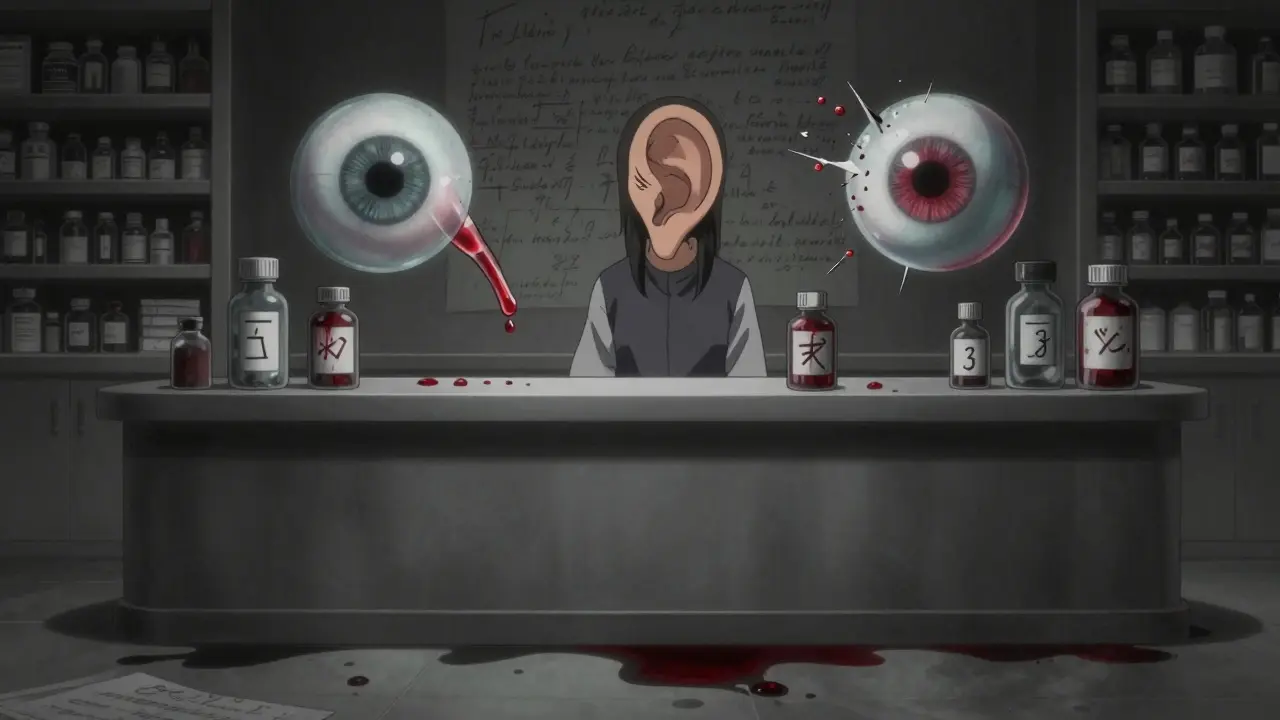
How Pharmacies Protect You
Pharmacists aren’t just filling prescriptions - they’re safety checkers. Most pharmacies use a three-step system to catch errors:- Automated flags - Your pharmacy’s computer system blocks known dangerous abbreviations. If a doctor writes U, the system won’t let it go through without correction.
- Pharmacist review - Every prescription is checked by a licensed pharmacist. If something looks off - like MS or q.d. - they’ll call the doctor’s office to confirm.
- Plain English labels - Even if the prescription says t.i.d., your label will say "three times a day." Walmart, CVS, and Walgreens all do this. Your label should never make you guess.
Some pharmacies even print warnings on the label: "This medication is for the right eye only" or "Do not take more than 2 tablets in 24 hours." That’s not extra paperwork - that’s your safety net.
What You Can Do to Stay Safe
You don’t have to be a medical expert to protect yourself. Here’s what to do:- Ask - If you see an abbreviation you don’t understand, ask the pharmacist. Say: "Can you explain what this means in plain English?"
- Check - Compare your label to the doctor’s instructions. Does "twice daily" match what’s written? Is the dose clear?
- Read - Don’t just grab the bottle. Read the full instructions. Look for words like "take with food," "avoid alcohol," or "do not crush." Those matter.
- Report - If you notice a mistake - like the wrong eye or the wrong dose - tell the pharmacy immediately. They’ll fix it and may even update their system to prevent others from making the same error.
Don’t be shy. Pharmacists expect these questions. In fact, they’re trained to answer them. The American Pharmacists Association says patients who ask questions have 40% fewer medication errors.
The Future: Are Abbreviations Disappearing?
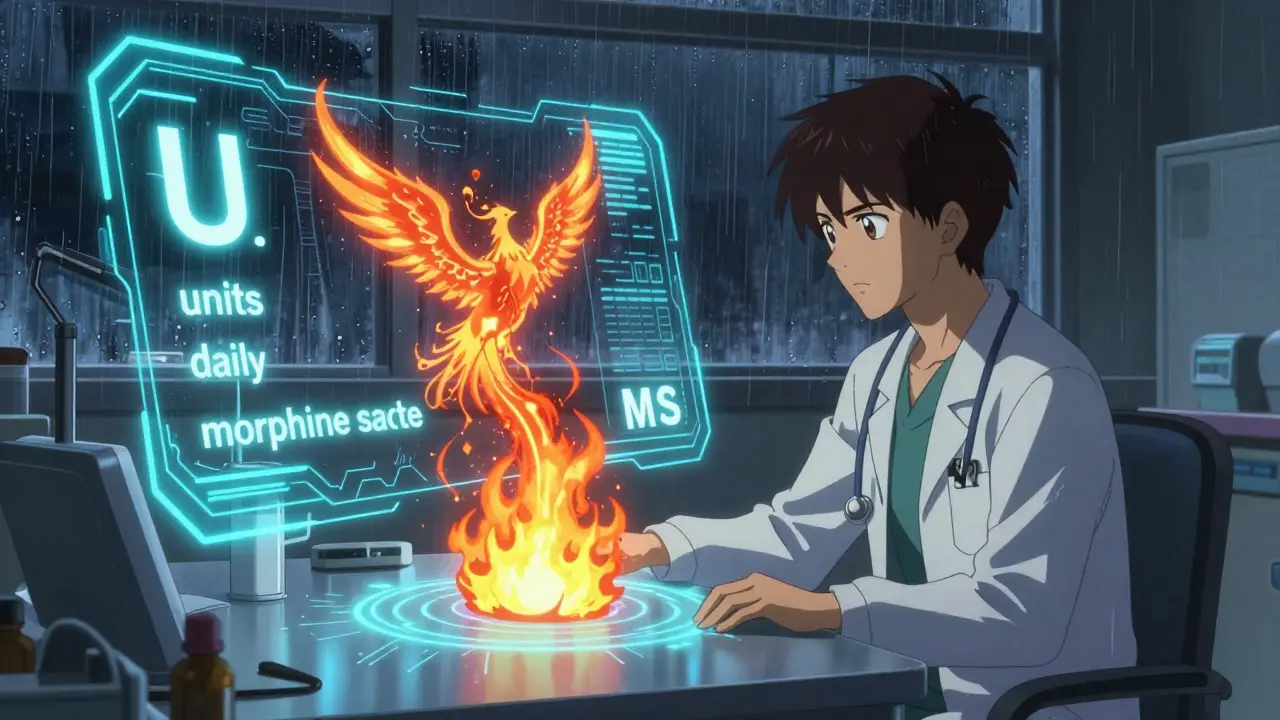
Yes - and fast. The World Health Organization wants all non-English abbreviations gone by 2030. The U.S. Pharmacopeia now requires prescriptions to use plain English terms, effective May 2024. Electronic systems like Epic and Cerner automatically convert q.d. to "daily," o.d. to "right eye," and U to "units." AI tools are now scanning prescriptions before they’re even printed. IBM Watson Health’s MedSafety AI, used in 178 U.S. hospitals, converts abbreviations with 99.2% accuracy. That means the days of handwritten Latin codes are numbered. But there’s a catch. While hospitals are moving fast, many small clinics and private doctors still use old habits. Hybrid systems - where some prescriptions are typed and others are handwritten - create confusion. A 2024 study found that during this transition, errors actually increased by 22.3% because people got used to one system and then had to switch.What This Means for You
You’re not just a patient - you’re the final line of defense. Even with all the tech and rules in place, mistakes can still happen. Your job isn’t to memorize Latin. Your job is to ask, to check, and to speak up. The goal isn’t to scare you. It’s to empower you. Prescription labels aren’t meant to be puzzles. They’re meant to keep you safe. And you have the right - and the power - to make sure they do.What does Rx mean on a prescription?
Rx comes from the Latin word "recipe," which means "take." It’s not an abbreviation for "prescription," even though that’s how most people use it. It’s a symbol that tells the pharmacist to dispense the medication that follows. You’ll see it at the top of every prescription, no matter the country or language.
Is it safe to use abbreviations like b.i.d. or q.d.?
No, they’re not considered safe anymore. The Joint Commission and the Institute for Safe Medication Practices have banned q.d. and b.i.d. because they’re too easily misread. q.d. can look like q.i.d., leading to someone taking a dose four times a day instead of once. b.i.d. can be confused with t.i.d. The safest practice is to always use "twice daily" or "once daily" in plain English.
Why is U dangerous on a prescription?
"U" stands for "units," but it looks too similar to the number 4 or the letter V. In 2018-2022, Pennsylvania alone recorded 12 deaths from insulin overdoses caused by misreading "U" as "4" or "IV." That’s why hospitals now require "units" to be spelled out. Never accept a prescription with "U" - ask for it to be rewritten.
What’s the difference between o.d. and a.d.?
o.d. means "right eye" (oculus dexter), and a.d. means "right ear" (auris dexter). o.s. is left eye, a.s. is left ear. Mixing them up is common - and dangerous. Giving eye drops in the ear can cause infection. Giving ear drops in the eye can damage the cornea. Always double-check the label and ask if you’re unsure.
Can I trust my pharmacy to catch these mistakes?
Yes - but only if you’re part of the process. Pharmacies use automated systems and pharmacist reviews to catch errors, but they rely on you to notice if something feels wrong. If your label says "take one tablet daily" but the prescription says "b.i.d.," speak up. Your pharmacist is trained to help you, not just fill bottles.
Why do some doctors still use old abbreviations?
Some doctors learned them in medical school and still use them out of habit. Others use electronic systems that auto-fill abbreviations. But change is coming. New rules require plain English by 2024-2025. Doctors who don’t adapt will find their prescriptions rejected by pharmacies or flagged by electronic systems. The pressure to stop using old abbreviations is stronger than ever.
What should I do if I see a dangerous abbreviation on my label?
Don’t take the medication. Call the pharmacy immediately. Ask them to confirm the instructions with the doctor’s office. If they can’t confirm, ask for a new label. If you’re still unsure, visit the pharmacy in person. Never guess what a symbol means - especially with medications like insulin, blood thinners, or antibiotics.
Akshaya Gandra _ Student - EastCaryMS
January 3, 2026 AT 17:02so i just got my insulin prescription and saw a 'U' on the label... i thought it meant 'unit' but now im scared i misread it as a 4?? like wtf why do they still use this?? i called the pharmacy and they fixed it, but why is this even a thing in 2025??