
Generic Drug Recalls and Safety Alerts: What Triggers Action
 Jan, 13 2026
When you pick up a generic pill from the pharmacy, you expect it to work just like the brand-name version-and to be safe. But what happens when that isn’t true? In 2024, the FDA issued 347 drug recalls, and nearly 9 out of 10 of them involved generic medications. Most of these weren’t random errors. They were the result of specific, measurable failures in manufacturing that put patients at risk.
What Actually Causes a Generic Drug to Be Recalled?
Not every mistake leads to a recall. The FDA only steps in when a drug fails to meet basic safety or quality standards. The triggers are clear, and they fall into four main categories.Sterility failures are the most urgent. If a pill or injection is contaminated with bacteria or fungi, it can cause life-threatening infections. In 2024, 37% of all recalls were linked to sterility issues. One example: a batch of injectable antibiotics made in India had mold spores in the solution. Patients who received it developed sepsis. That’s a Class I recall-the highest level.
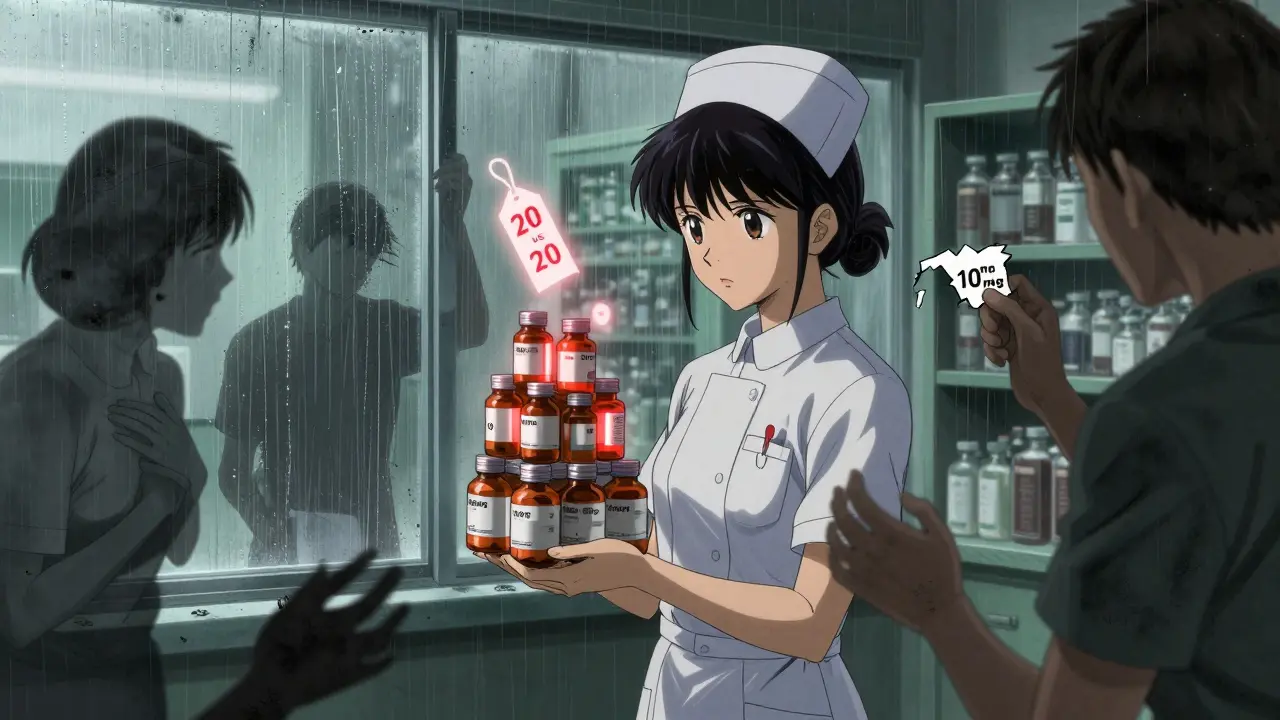
Labeling errors are surprisingly common. A pill might say it contains 10 mg of a drug, but actually holds 20 mg. That’s what happened in July 2024 with potassium chloride injections. Patients got double the dose. Some went into cardiac arrest. Labeling mistakes accounted for 9% of recalls that year.
Active ingredient problems are another major trigger. Generic drugs must contain the exact same amount of active ingredient as the brand. But in some cases, labs found only 60% or 80% of the required potency. That means the drug doesn’t work. A patient taking a low-potency blood pressure pill might think it’s working, when in reality, their condition is worsening.
Particulate matter-tiny bits of glass, metal, or plastic-showed up in 12% of recalls. These aren’t just contaminants. They can clog small blood vessels or cause inflammation inside the body. One recall involved generic insulin vials with visible flakes. Patients reported pain at injection sites. The manufacturer hadn’t filtered the solution properly.
Class I, Class II, Class III: What Do the FDA Categories Mean?
The FDA doesn’t just say “this drug is recalled.” They rank the risk. This helps doctors and patients understand how urgent the response needs to be.Class I recalls are the most serious. There’s a real chance the drug could cause serious harm or death. In 2024, 62% of all recalls fell into this category or Class II. Examples: mislabeled insulin, contaminated IV bags, pills with no active ingredient.
Class II means the problem is likely temporary or reversible. You might get a headache, nausea, or a mild allergic reaction. It’s not life-threatening, but it still matters. The April 2025 Glenmark recall-40 different generic drugs pulled due to poor factory conditions-was Class II. The drugs weren’t toxic, but they were made in an unclean environment. That’s a red flag.
Class III is the least serious. The drug doesn’t work as labeled, but it won’t hurt you. Maybe the expiration date is wrong, or the bottle says “take with food” when it doesn’t need to. These are administrative fixes, not medical emergencies.
Why Are So Many Recalls Coming From India and China?
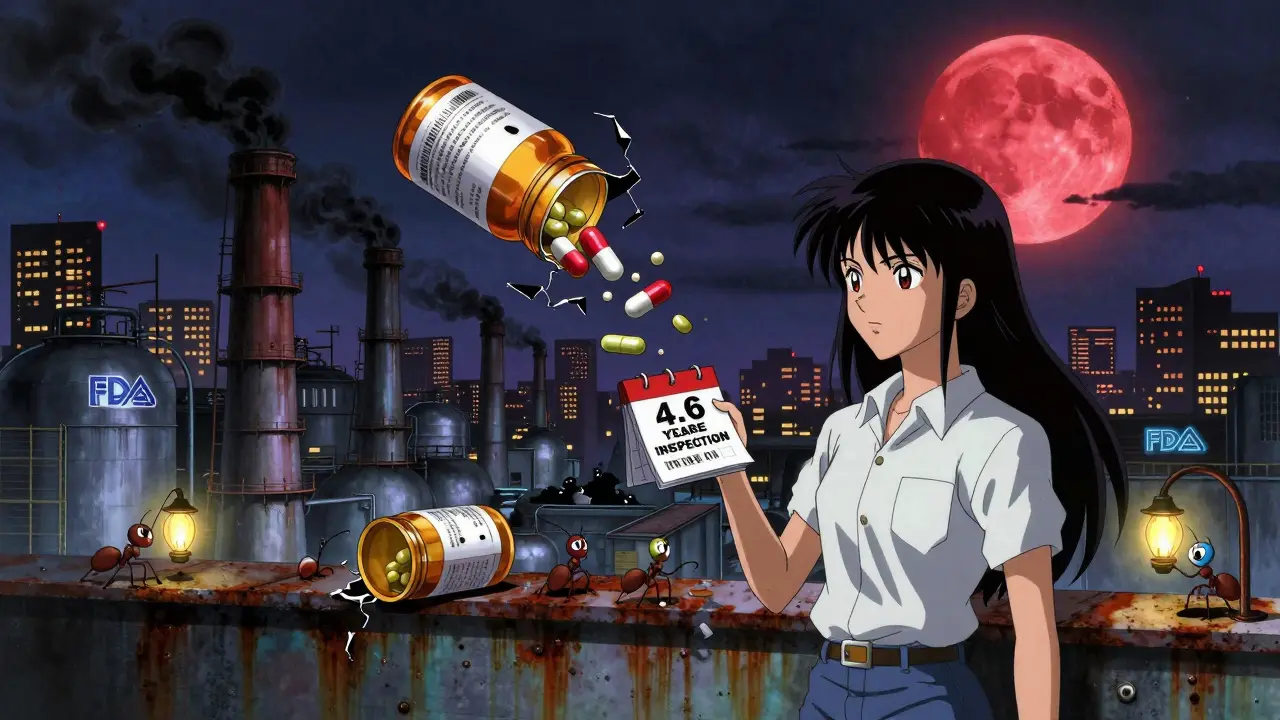
About 80% of the active ingredients in U.S. generic drugs come from just two countries: India and China. That’s not a problem by itself. But the oversight doesn’t match the scale.Domestic drug factories in the U.S. get inspected every 1.8 years. Foreign factories? Every 4.6 years. That’s not a typo. In the case of Glenmark’s Indian facility, the FDA hadn’t sent an inspector there in over four years. Meanwhile, the company had already been flagged for violations in 2021 and 2022. The system relies on companies to report problems themselves. Many don’t-until it’s too late.
Even worse, the FDA’s budget only covers 17% of the foreign inspections needed to keep up. That’s why a single bad factory can send contaminated drugs to hundreds of pharmacies across the country.
How Do Recalls Actually Happen?
The process sounds simple: company finds a problem, calls the FDA, and pulls the product. But in reality, it’s messy.Most recalls are voluntary. The manufacturer decides to act. The FDA can’t force them-but they can push hard. In 2024, only 2% of recalls were mandatory. That’s a problem. A company might delay a recall to avoid bad press or lost sales. The average time from detecting a problem to public notice? 42 days in the U.S. In the EU, where recalls are mandatory, it’s 18 days.
Once a recall is announced, the FDA posts it online in their Enforcement Reports. But that’s not enough. Most patients never see it. Only 12% of people get direct notification from their pharmacy or doctor. The rest find out by accident-maybe when they look up their medication online or hear a news report.
What Happens When a Recall Hits a Hospital or Pharmacy?
It’s not just about pulling pills off the shelf. It’s a full emergency response.Hospitals have to:
- Check every bottle for the exact lot number
- Stop using the drug immediately
- Notify every patient who received it
- Replace it with a safe alternative
One nurse in Illinois told the story of contacting 127 patients after a hydroxyzine recall. Only 38 had side effects. But 100% were terrified. Patients don’t know how to react. A 2025 AARP survey found 78% of people stopped taking the recalled drug right away-even if their doctor told them to wait. That’s dangerous. Stopping blood thinners or seizure meds cold turkey can kill you.
Pharmacies use automated systems to block recalled drugs from being dispensed. But smaller clinics still rely on paper lists. And tracking lot numbers across multiple suppliers? That’s where most hospitals struggle. 82% report difficulties finding which batches were affected.
What Are Patients Really Feeling?
Trust is broken.On patient forums, the same complaints keep coming up:
- “I had no idea my medication was recalled until my neighbor mentioned it.”
- “The notice from the pharmacy was written in tiny print. I couldn’t read it.”
- “I called my doctor. They said ‘it’s probably fine.’ But what if it’s not?”
Consumer Reports found 89% of patients found recall notices confusing. They don’t know if they should panic, wait, or call their doctor. The FDA’s MedWatch system lets patients report side effects-but only 3.2% of people ever use it. That means most problems go unreported.
What’s Changing? What’s Next?
The system is starting to change-slowly.In 2025, the FDA announced the Enhanced Oversight Initiative. High-risk foreign factories will now be inspected every year, not every 4.6 years. That’s a big step. The agency is also testing AI tools that scan manufacturing data to predict problems before they happen.
Some companies are using blockchain to track every pill from factory to pharmacy. That way, if one batch is bad, you know exactly where it went-and you can pull it fast. Only 18% of manufacturers use it now, but that’s up from 3% in 2023.
And there’s pressure from Congress. The Pharmaceutical Supply Chain Security Act, introduced in May 2025, would force foreign manufacturers to share real-time quality data with the FDA. If passed, it could cut recall delays in half.
But here’s the hard truth: the FDA still needs $780 million more per year to do the inspections they say are necessary. Without that money, the same problems will keep happening.
What Should You Do?
You can’t control the factory. But you can protect yourself.- Check the FDA’s Enforcement Reports website every few months. Search by your drug’s name.
- Keep the original packaging. Lot numbers are printed on the bottle or box. If a recall happens, you’ll know if yours is affected.
- Don’t stop your medication unless your doctor tells you to. A recall doesn’t mean you’re in danger right now-it means the drug might be faulty.
- Ask your pharmacist: “Is this generic from a U.S. or foreign facility?” Most will know.
- If you feel unusual symptoms after starting a new generic, report it to your doctor and to MedWatch. Your report could help prevent the next recall.
Generic drugs save billions of dollars every year. They’re safe for most people. But safety isn’t automatic. It’s built by inspections, transparency, and accountability. Right now, that system is stretched thin. The next recall might be just one faulty batch away.
What should I do if my generic drug is recalled?
Don’t stop taking the medication unless your doctor or pharmacist tells you to. Some recalls are for minor issues like labeling errors, and stopping suddenly can be dangerous. Instead, check the lot number on your bottle against the FDA’s recall list. If your batch is affected, contact your pharmacy for a replacement. Never throw away medication without guidance.
Are generic drugs less safe than brand-name drugs?
No-by law, generics must contain the same active ingredient, strength, and dosage form as the brand-name version. The problem isn’t the generic label-it’s the manufacturing. Most recalls happen because of poor quality control at foreign factories, not because the drug is generic. Many brand-name drugs are also made overseas. The issue is oversight, not the type of drug.
Why don’t I get a direct notice when my drug is recalled?
The FDA doesn’t have the resources to notify every patient. Recalls are sent to pharmacies, hospitals, and distributors. It’s up to them to inform patients. Many small pharmacies don’t have automated systems, so they rely on manual checks. That’s why only 12% of patients receive direct notices. You need to stay informed yourself-check the FDA website or ask your pharmacist.
Can I trust a generic drug made in India or China?
Many are safe. But because foreign factories are inspected far less often than U.S. ones, the risk of quality issues is higher. Look for manufacturers with a clean FDA inspection history. Some companies publish their facility inspection reports online. If you’re concerned, ask your pharmacist if the drug comes from a facility with recent clean inspections.
How can I find out if my medication has been recalled?
Go to the FDA’s website and search their Enforcement Reports database. You can search by drug name, company, or lot number. Bookmark the page and check it every few months, especially if you take a generic drug. You can also sign up for FDA email alerts. Don’t rely on your pharmacy to notify you-they might not know until it’s too late.
Are there warning signs that a generic drug might be faulty?
Yes. If your medication suddenly stops working-like your blood pressure isn’t controlled, or your pain returns-talk to your doctor. Also watch for physical changes: pills that look different in color or shape, strange odors, or visible particles in liquid medications. These aren’t always signs of a recall, but they’re red flags worth investigating.