
How to Use Pharmacy Delivery and Mail-Order for Convenience
 Jan, 8 2026
Running out of your blood pressure or diabetes meds shouldn’t mean a trip across town in the rain, a long wait at the pharmacy, or worse - skipping a dose. That’s where pharmacy delivery and mail-order services come in. For people managing long-term conditions, these services aren’t just convenient - they’re lifesavers.
Think about it: if you’re on a daily pill for cholesterol or thyroid issues, you’re taking that same medicine every day, for months or years. Filling a 30-day supply every four weeks adds up. You’re making three trips to the pharmacy every three months. Now imagine getting all three months’ worth delivered to your door in one box. That’s the power of a 90-day mail-order prescription.
How Mail-Order Pharmacies Actually Work
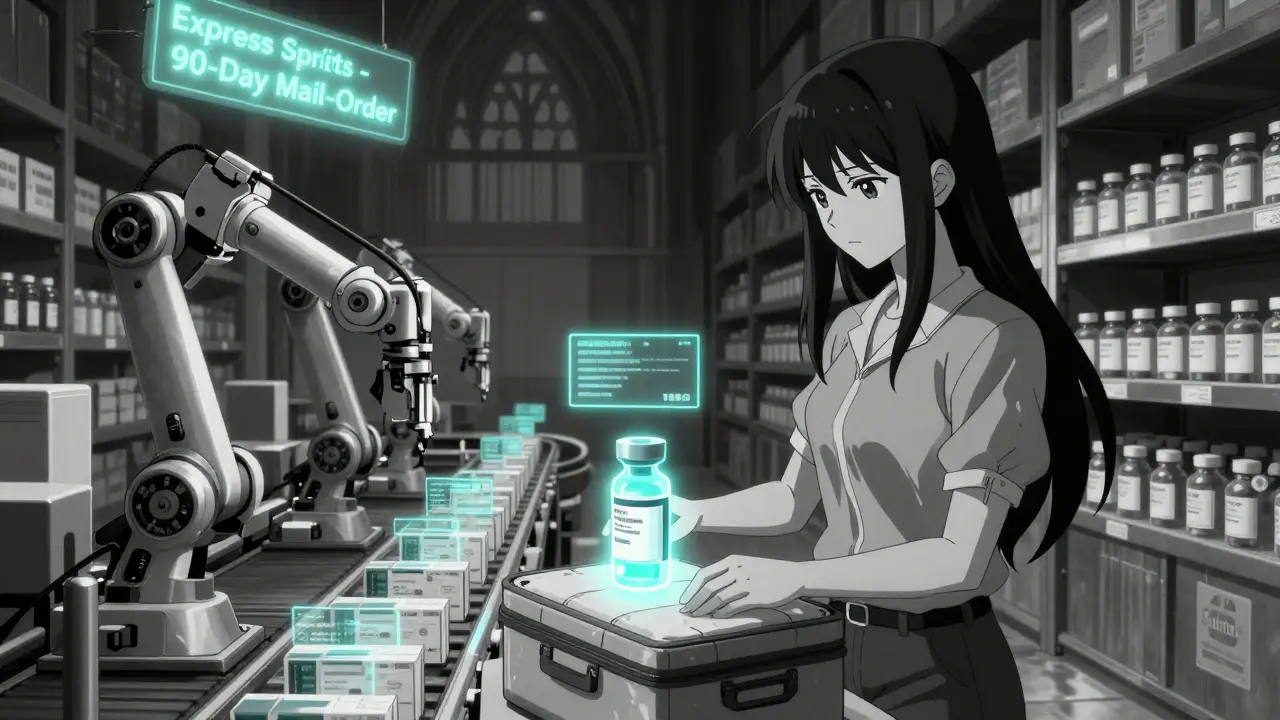
Mail-order pharmacies aren’t some shady online shop. They’re licensed, regulated, and often run by your own health plan or pharmacy benefit manager - like Express Scripts, CVS Caremark, or OptumRx. These aren’t small operations. They handle over 25% of all prescription drugs in the U.S., using robotic systems and computer checks to reduce errors. In fact, they’re 23 times more accurate than your local retail pharmacy.
Here’s how it works in practice. You start by checking if your insurance covers mail-order. Most plans do - and it’s usually free to use. You don’t pay extra. Then, you transfer your prescriptions. Your doctor can send the prescription electronically to the mail-order pharmacy, or you can call them directly. They’ll handle the rest. You’ll get your first 90-day supply shipped within 3 to 5 business days. After that, refills are automatic unless you opt out.
Some services, like Patient Direct Pharmacy, even offer next-day delivery for urgent refills. Temperature-sensitive drugs - like insulin or certain biologics - arrive in insulated boxes with cooling packs. No melting. No spoilage.
Why People Stick With It (And Why You Should Too)
The real reason people switch? Adherence. It’s not about saving a few bucks - though you do. It’s about staying healthy.
Studies show that patients on 90-day mail-order prescriptions are 82% likely to take their meds as prescribed. That’s compared to just 52% for people who refill every 30 days at a retail pharmacy. Why? Because when you get three months’ worth at once, you’re less likely to forget. You’re less likely to run out. You’re less likely to skip doses because you’re tired of driving to the pharmacy.
And the cost savings? Real. A 90-day supply usually costs the same as two 30-day copays. For a $150-a-month drug, that’s $450 over three months at retail. With mail-order, you pay $300 - saving $150 every quarter. That’s $600 a year, just for one medication.
People with mobility issues, chronic pain, or no car benefit the most. One Reddit user with MS wrote: “Mail-order changed my life. I don’t have to struggle to get to the pharmacy anymore.” That’s not a marketing line. That’s real life.
What You Can’t Get Through Mail-Order
Mail-order isn’t magic. It doesn’t work for everything.
You can’t get controlled substances like opioids, Adderall, or Xanax through the mail. Those require in-person pickup because of strict federal rules. Same with antibiotics for an infection - if you’re sick and need it today, go to your local pharmacy. Eighty-seven percent of doctors say you should.
Also, if you’ve just started a new medication, it’s smart to fill the first 30-day supply at a retail pharmacy. That way, you can talk to a pharmacist face-to-face. They’ll explain side effects, check for interactions, and answer questions you didn’t even know to ask.
And yes, things can go wrong. About 1.2% of packages get lost or damaged. Delivery delays happen too - 8.3% of users report packages taking longer than promised. That’s why the top tip from users is simple: order your refill at least 10 days before you run out.
How to Get Started - Step by Step
Getting set up takes less than 20 minutes. Here’s how:
- Check your insurance plan. Log into your health insurer’s website or call customer service. Ask: “Do you offer mail-order pharmacy? What’s the pharmacy’s name?” Most plans list it right on the member portal.
- Transfer your prescriptions. You can do this online, by phone, or even by asking your doctor to send it directly. You’ll need your prescription number or the name of your current pharmacy.
- Set up your account. Create a login on the mail-order pharmacy’s website. Enter your address, insurance info, and emergency contact. Many let you upload a photo of your ID if needed.
- Choose your delivery schedule. Most services let you pick a delivery date. If you’re on multiple meds, ask to sync them - so all your pills arrive on the same day. Sixty-eight percent of mail-order pharmacies offer this now.
- Order your first refill early. Don’t wait until you’re out. Order when you have 10 days left. That gives time for processing and shipping.
Most services offer 24/7 phone support. You can talk to a pharmacist anytime - not just during business hours. They’ll answer questions about side effects, drug interactions, or even help you adjust your schedule if your routine changes.
What’s New in 2026
Mail-order isn’t standing still. In 2023, Blue Cross NC started covering more specialty drugs through mail-order - including high-cost biologics for arthritis and MS. UnitedHealthcare rolled out AI tools that predict when someone might miss a dose and send a reminder text. If you’re on a plan with them, you might get a message like: “Your next refill is due in 7 days. Want us to ship it?”
Some companies are testing drone deliveries in rural areas. UPS and CVS are running pilots in North Carolina to drop off prescriptions in places where the nearest pharmacy is 40 miles away. It’s still early, but it shows where this is headed.
And if you’re on a work health plan? You’re probably already eligible. Eighty-five percent of Fortune 500 companies now offer mail-order as a standard benefit. Check your employee portal - you might be saving money without even knowing it.
When to Stick With Your Local Pharmacy
There’s no shame in using your neighborhood pharmacy. It’s still the best place for:
- New prescriptions - especially if you’re unsure about side effects
- Acute meds - antibiotics, painkillers after surgery, or emergency refills
- Medications that need counseling - like blood thinners or insulin
- Over-the-counter advice - when you’re not sure if a cough medicine will interact with your heart pill
Many people use both. They get their maintenance meds by mail and keep a local pharmacy for emergencies or quick questions. That’s the smartest approach.
Final Thoughts: Convenience That Saves Lives
Pharmacy delivery isn’t just about saving time. It’s about removing barriers. For someone with arthritis, it’s not a chore - it’s dignity. For someone working two jobs, it’s not a luxury - it’s survival. For someone living in a pharmacy desert, it’s the only way to stay alive.
If you’re on long-term medication, ask yourself: Are you taking your pills because you have to - or because it’s easy? Mail-order makes it easy. And when it’s easy, you do it. And when you do it, you stay healthy.
It’s not complicated. It’s not expensive. And it’s available to most people with insurance. The only thing standing between you and a simpler, healthier routine is one phone call or one click.
Can I get my insulin through mail-order pharmacy?
Yes, insulin and other temperature-sensitive medications can be shipped through mail-order pharmacies. They use special insulated packaging with cooling packs to keep the medication at the right temperature during transit. Most major mail-order services, including those tied to Medicare and private insurers, now cover insulin delivery. Just make sure to order ahead - don’t wait until your current bottle runs out.
Is mail-order pharmacy cheaper than my local pharmacy?
Usually, yes. For most maintenance medications, a 90-day mail-order supply costs the same as two 30-day copays. That means you save about 25-35% compared to buying three separate 30-day fills. For example, a $150/month drug could cost $450 at retail over three months - but only $300 with mail-order. That’s $150 saved every quarter.
What if my mail-order prescription is delayed or lost?
If your package doesn’t arrive on time, contact the mail-order pharmacy’s customer service immediately. Most offer 24/7 phone support and can usually send a replacement within 24-48 hours. Some even offer expedited shipping at no extra cost for urgent cases. Keep your tracking number handy - it helps them locate your package faster. About 1.2% of shipments get lost or damaged, so delays aren’t common, but they happen.
Can I use mail-order if I don’t have insurance?
Yes. Even without insurance, you can use mail-order pharmacies like Patient Direct Pharmacy or others that offer cash prices. These are often lower than retail pharmacy prices, especially for generic drugs. You’ll pay upfront, but you’ll still get the 90-day supply discount. Some services even offer discount cards you can apply at checkout.
Are there any medications that can’t be mailed?
Yes. Federal law prohibits mailing controlled substances like opioids (oxycodone, hydrocodone), stimulants (Adderall), benzodiazepines (Xanax), and certain sleep aids. These must be picked up in person. Also, some specialty drugs that require special handling or patient counseling may not be available by mail - check with your pharmacy or insurer.
How do I know if my plan covers mail-order?
Check your insurance member portal or call the number on the back of your card. Look for terms like “mail-order pharmacy,” “home delivery,” or “90-day supply.” Most plans include it at no extra cost. If you’re on Medicare Part D, mail-order is a standard benefit. If you’re unsure, ask your doctor’s office - they often know which pharmacies your plan uses.
Can I switch back to my local pharmacy later?
Absolutely. You’re never locked in. You can switch back to your local pharmacy anytime - even if you’ve been using mail-order for years. Just call your local pharmacy and ask them to transfer your prescriptions. You can also use both: mail-order for maintenance meds, local pharmacy for emergencies or new prescriptions.
Do mail-order pharmacies offer pharmacist consultations?
Yes. Most major mail-order pharmacies have pharmacists available 24/7 by phone. You can call to ask about side effects, drug interactions, or how to take your pills correctly. Some even offer video consultations. This isn’t just a phone tree - you’ll speak to a licensed pharmacist who can answer your questions in real time.
If you’re taking medication every day, think about this: what’s easier - driving to the pharmacy every month, or having your pills show up at your door? The answer isn’t just about convenience. It’s about staying healthy - without the hassle.
Pooja Kumari
January 10, 2026 AT 11:18Okay but imagine being in Delhi and your insulin arrives in a box that’s been sitting in 45°C heat for three days because the delivery guy didn’t know it needed cooling. I’ve seen this happen. Mail-order sounds great on paper, but in places where infrastructure is a joke, it’s a gamble. I’m not saying don’t use it-I’m saying don’t trust the system blindly. My aunt got spoiled insulin last monsoon. She ended up in the ER. No one apologized. Just a refund.
And don’t get me started on the ‘24/7 pharmacist’ thing. You call, you wait 22 minutes, then some guy with an accent reads you a script about ‘adherence’ while your blood sugar’s spiking. It’s not care. It’s corporate theater.
I use mail-order for my blood pressure pills because it’s cheaper, but I still go to the local pharmacy every time I need something new. Because when you’re sick, you don’t want to be a ticket number. You want a human who remembers your name.
And yes, I know the stats say 82% adherence. But those stats don’t count the people who got their meds late and skipped a week because they were too scared to call again. We’re not robots. We’re people with lives, not data points.
Also, why is no one talking about how these companies sell your data? My insurance told me mail-order was ‘free’-then I started getting ads for diabetes supplements on Instagram. Coincidence? I think not.
Convenience is great. But when convenience costs your health, it’s not convenience. It’s exploitation dressed up as innovation.
So yeah. I use it. But I hate it. And I won’t stop complaining until they fix the damn delivery system.
Jerian Lewis
January 10, 2026 AT 22:51People act like mail-order is some revolutionary breakthrough, but it’s just capitalism optimizing the last mile of exploitation. You’re not ‘saving time’-you’re being funneled into a system designed to maximize profit margins and minimize human interaction. The ‘23x more accurate’ claim? That’s because robots don’t get tired. Humans do. And when humans are removed from the equation, accountability vanishes.
Also, the ‘85% of Fortune 500 companies offer this’ argument? That’s not a win. That’s a trap. Employers don’t care about your health-they care about reducing absenteeism and lowering insurance payouts. Mail-order isn’t about you. It’s about their balance sheet.
And don’t get me started on the ‘AI predicts when you’ll miss a dose’ nonsense. That’s not care. That’s surveillance with a side of guilt-tripping. ‘Hey, you didn’t take your pill. We noticed. We’re disappointed.’
Real healthcare is personal. It’s messy. It’s inconvenient. And that’s how it should be. If you want to be treated like a product, fine. But don’t call it progress.