
Medical Weight Management: Clinics, Medications, and Monitoring Explained
 Jan, 5 2026
Obesity isn’t a lack of willpower. It’s a chronic disease - and treating it like one changes everything. Since the American Medical Association officially recognized obesity as a disease in 2013, the approach to weight loss has shifted from quick fixes to long-term, science-backed care. Today, medical weight management combines clinics, medications, and ongoing monitoring to help people lose weight and keep it off - not just for looks, but for health.
What Medical Weight Management Really Means
Medical weight management isn’t a diet plan you buy online. It’s a structured, doctor-led program that treats obesity like diabetes or high blood pressure: with regular check-ins, personalized treatment, and evidence-based tools. The goal? Lose at least 5% of your body weight - and keep it off. That’s not a magic number. Losing just 5% can lower blood pressure, improve insulin sensitivity, and reduce liver fat. Lose 10% or more, and you might reverse type 2 diabetes.
According to the 2025 American College of Cardiology guidelines, this approach works best when it includes four key pieces: nutrition counseling, physical activity support, behavioral therapy, and medication when needed. It’s not about starving yourself or doing 2-hour workouts. It’s about finding a sustainable rhythm that fits your life.
Clinics: More Than Just a Doctor’s Office
Medical weight management clinics look different from what you might expect. They’re not flashy spas or fitness centers. They’re often part of hospitals or academic medical centers. At West Virginia University’s program, for example, patients must complete a pre-recorded orientation and fill out detailed questionnaires before even meeting a provider. Why? To understand what’s really holding them back - stress, sleep, emotional eating, or even medications that cause weight gain.
These clinics use a team approach. You’ll see a doctor, a registered dietitian, and a behavioral coach - all working together. A 2024 JAMA Internal Medicine study found patients in these programs lost an average of 9.2% of their body weight in a year. Compare that to commercial programs like Weight Watchers or Noom, where the average is 5.1%. The difference? Medical programs tailor everything to your health history, medications, and conditions like prediabetes or sleep apnea.
They also fix problems big commercial programs ignore. Chairs without armrests. Blood pressure cuffs in multiple sizes. Staff trained to avoid blaming language. These small changes reduce stigma - and make people more likely to stick with treatment.
Medications: The Game-Changers
The biggest shift in medical weight management over the last five years? The drugs. Before 2020, options were limited: phentermine, orlistat, or older GLP-1 drugs like liraglutide. Now, we have semaglutide (Wegovy®) and tirzepatide (Zepbound®) - drugs originally developed for type 2 diabetes that turned out to be powerful weight-loss tools.
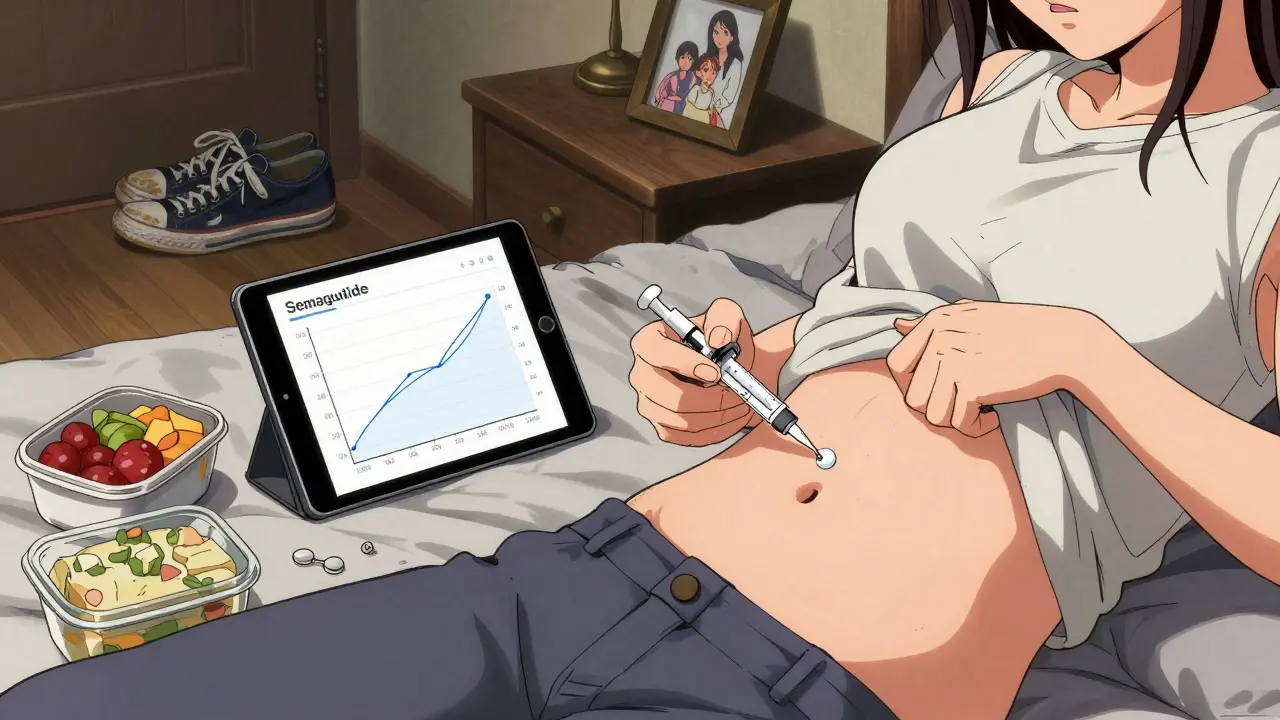
Semaglutide, given as a weekly injection, leads to about 14.9% average weight loss over 72 weeks. Tirzepatide, a newer dual-action drug, hits 20.2% in the same timeframe. Even more impressive? These drugs don’t just shrink your waistline. They lower heart attack and stroke risk, especially in people with type 2 diabetes. That’s why the American Diabetes Association now lists weight loss as a primary goal of diabetes care - not an afterthought.
There’s even a new drug on the horizon: retatrutide, a triple agonist that targets GLP-1, GIP, and glucagon receptors. Early trials show 24.2% weight loss at 48 weeks. It’s not FDA-approved yet, but it’s coming.
But here’s the catch: insurance coverage. Only 68% of commercial insurers cover these drugs in 2025. Medicare Advantage plans cover them in just 12% of cases. That means many patients pay $1,000-$1,300 a month out of pocket. For comparison, diabetes medications like metformin or insulin are covered in 98% of plans. That gap is a major barrier - and a huge injustice.
Monitoring: Why Tracking Matters More Than You Think
Weight loss isn’t linear. You’ll have weeks where the scale doesn’t move. That’s normal. But without monitoring, you won’t know if you’re on track - or if something else is going wrong.
Medical programs track more than just weight. They measure waist circumference, blood pressure, fasting glucose, and HbA1c. They check liver enzymes and cholesterol. They ask about sleep, stress, and mood. The American Diabetes Association recommends checking these metrics at least every three months during active treatment.
Many clinics now use digital tools. The MyWVUChart app, for example, asks patients to log meals, movement, and mood weekly. Patients say this helps them spot patterns - like how poor sleep leads to late-night snacking. It’s not surveillance. It’s insight.
And it works. A 2025 survey by the Obesity Action Coalition found 78% of participants reported better quality of life after six months. The top reasons? Personalized meal plans and a non-judgmental team. The biggest complaints? Cost and long wait times for appointments.
Who Gets Access - And Who Doesn’t
Not everyone has equal access. Black and Hispanic patients are 43% less likely to be offered weight-loss medication, even when they meet the same BMI and health criteria as white patients. This isn’t about choice - it’s about bias. Some providers still see obesity as a personal failure, not a medical condition.
That’s changing. The 2025 ACC guidelines explicitly call out this disparity and urge clinics to train staff in cultural humility. They recommend using standardized documentation templates so no patient slips through the cracks. Sixty-eight percent of academic medical centers now use these templates - up from 22% in 2020.
Employers are stepping in too. Forty-seven percent of Fortune 500 companies now offer medical weight management as part of employee wellness programs - up from 18% in 2022. That’s a big deal. It means more people can get care without paying thousands out of pocket.

Cost vs. Value: Is It Worth It?
Yes - if you can afford it. Clinic programs typically cost $150-$300 a month. Commercial apps run $20-$60. But here’s the math: every $1 spent on medical weight management saves $2.87 in future healthcare costs for diabetes and heart disease within five years. That’s according to a 2025 study in Obesity journal.
Compare that to bariatric surgery, which costs $15,000-$25,000 upfront and carries a 4.7% complication rate. Medical weight management has a complication rate of just 0.2%. It’s safer, more accessible, and works well for people with BMI 30-35 - the majority of people with obesity.
For people with BMI over 40, surgery still has a role. But for most, medication + behavior + monitoring is the best first step.
What to Expect If You Start
If you’re considering a medical weight management program, here’s what usually happens:
- You’ll get your BMI checked. Most clinics require BMI ≥30, or ≥27 with conditions like high blood pressure or prediabetes.
- You’ll complete an orientation and health questionnaire.
- You’ll meet your team: doctor, dietitian, coach.
- You’ll get a personalized plan - not a generic diet. Your meals will fit your culture, budget, and preferences.
- You’ll start medication if appropriate - and get regular follow-ups every 2-4 weeks.
- You’ll track your progress with tools provided by the clinic.
It takes time. Most people need 6-12 months to build new habits. But the results last. People who stay in the program for a year are five times more likely to keep off the weight than those who try alone.
The Future Is Here
By 2030, the American Diabetes Association predicts weight management will be as routine in diabetes care as checking HbA1c. Medical weight management is no longer optional - it’s standard care. More medical schools are teaching obesity medicine: 92% now, up from 36% in 2015. Board-certified obesity medicine physicians grew by 29% between 2023 and 2025.
The tools are better. The science is clearer. The need is urgent. Obesity affects more than 40% of U.S. adults. It’s not a personal flaw. It’s a public health crisis - and medical weight management is one of the most effective tools we have to fix it.
Rachel Wermager
January 5, 2026 AT 19:04The 2025 ACC guidelines are a watershed moment-finally, obesity is being treated as a multisystem metabolic disorder, not a behavioral failure. The integration of GLP-1/GIP agonists into primary care protocols aligns with the pathophysiology of adipose tissue dysfunction and insulin resistance. What’s missing from mainstream discourse is the role of adipokine dysregulation and hypothalamic set-point reprogramming-those aren’t just buzzwords, they’re the reason phentermine failed for 80% of patients. We need biomarker-guided titration, not one-size-fits-all dosing.
Leonard Shit
January 6, 2026 AT 14:43man. i just tried to sign up for one of these clinics. spent 45 mins filling out forms, got an email saying ‘we’re currently waitlisted until q3 2026.’ meanwhile, my cousin got a 3-month supply of wegovy from a guy on instagram for $200. guess the system works… for someone.