
Photosensitivity from Medications: Sun Safety and Skin Protection Guide
 Jan, 20 2026
Photosensitivity Risk Checker
This tool helps you understand your risk of photosensitivity reactions from medications. Photosensitivity occurs when certain drugs make your skin more sensitive to sunlight, potentially leading to severe sunburns, rashes, or long-term skin damage. Based on your medications, we'll provide a risk assessment and personalized sun safety recommendations.
Select Medications You're Taking
Personalized Recommendations
Many people don’t realize that a common prescription or over-the-counter drug can turn a sunny day into a painful skin emergency. If you’ve ever gotten a bad sunburn after just a short walk outside - even when you used sunscreen - your medication might be the culprit. This isn’t rare. Around 1,000 medications can make your skin dangerously sensitive to sunlight. And if you’re taking one of them, skipping sun protection isn’t just uncomfortable - it could raise your risk of skin cancer.
What Exactly Is Medication-Induced Photosensitivity?
Photosensitivity from medications happens when a drug in your body reacts with ultraviolet (UV) light, usually UVA rays that penetrate deep into your skin. This isn’t a regular sunburn. It’s a chemical reaction triggered by the drug, turning sunlight into a skin irritant. There are two main types: phototoxic and photoallergic reactions.Phototoxic reactions make up about 95% of cases. They happen fast - within 30 minutes to two hours after sun exposure. Your skin turns red, swells, burns, and sometimes blisters, just like a severe sunburn. It’s dose-dependent: the more of the drug you’ve taken and the longer you’re in the sun, the worse it gets. Common offenders include doxycycline, ciprofloxacin, ibuprofen, and amiodarone.
Photoallergic reactions are rarer but trickier. They’re an immune response. The UV light changes the drug into something your body sees as foreign. Symptoms show up 24 to 72 hours later: an itchy, eczema-like rash that can spread beyond sun-exposed areas. These often come from sulfonamide antibiotics, certain diuretics, and even some ingredients in sunscreen, like oxybenzone.
Which Medications Are Most Likely to Cause Problems?
You might be surprised how many everyday drugs carry this risk. Antibiotics top the list - about 40% of photosensitivity cases involve them. Here are the most common culprits:- Tetracyclines (doxycycline, minocycline): Used for acne, Lyme disease, and respiratory infections. Up to 20% of users get phototoxic reactions.
- Fluoroquinolones (ciprofloxacin, levofloxacin): Common for urinary and sinus infections. About 1-2% of users react.
- NSAIDs (ibuprofen, naproxen, ketoprofen): Ketoprofen is especially notorious - even topical gels can trigger reactions.
- Amiodarone: A heart medication used for irregular rhythms. Up to 75% of long-term users develop lasting photosensitivity that can stick around for years after stopping.
- Sulfonamides (sulfa drugs): Often used for UTIs. More likely to cause photoallergic rashes.
- Diuretics (hydrochlorothiazide): Frequently prescribed for high blood pressure. Can cause both phototoxic and photoallergic reactions.
- Some antidepressants and antipsychotics (like fluoxetine, chlorpromazine): Less common, but still significant.
Women are more likely to experience photoallergic reactions - likely because they use more topical medications, creams, and cosmetics that contain photosensitizing ingredients.
Why Regular Sunscreen Often Fails
Most people think SPF 30 or even SPF 50 is enough. But if you’re on a photosensitizing drug, standard sunscreens often don’t cut it. Here’s why:- Many sunscreens focus on UVB protection (the burning rays) but skimp on UVA (the deeper, aging rays). The FDA says only 35% of SPF 50+ sunscreens offer enough UVA protection.
- Most people apply only a quarter to half the amount needed. You need about one ounce - enough to fill a shot glass - to cover your entire body.
- Chemical sunscreens (like those with oxybenzone) can themselves trigger photoallergic reactions in some people.
For medication-related photosensitivity, you need:
- SPF 50+ - no exceptions.
- Mineral-based formulas with zinc oxide (at least 15%) or titanium dioxide. These sit on top of your skin and physically block both UVA and UVB.
- Reapplication every two hours, even if you’re not sweating or swimming.
One study found patients who used mineral sunscreens with zinc oxide had 60% fewer reactions than those using chemical alternatives.
Clothing Is Your Best Defense
Sunscreen alone isn’t enough. Your clothes are your first line of defense - but not all fabrics are equal.A regular white cotton T-shirt only blocks about 5% of UV radiation. When wet, that drops to 3%. That’s why so many people get burned even under a shirt.
Instead, look for UPF 50+ clothing - designed specifically to block 98% of UV rays. Brands like Solbari, Coolibar, and Columbia’s Omni-Shade line have been independently tested and proven effective. These clothes are lightweight, breathable, and don’t feel like wearing a tent.
Real users report dramatic results. One person on a patient forum said, “After switching to UPF 50+ shirts and wide-brimmed hats, my phototoxic reactions dropped by 90%.”
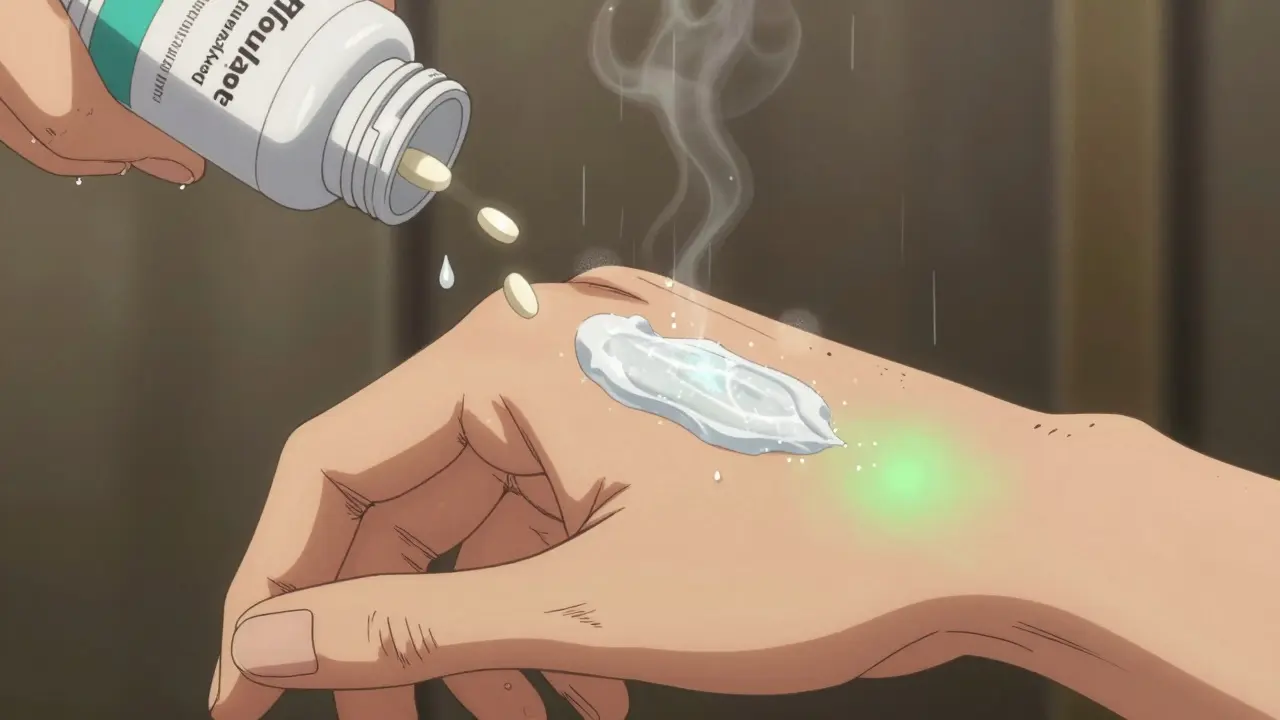
Behavioral Changes That Actually Work
It’s not just about what you put on your skin - it’s about when and where you go outside.- Avoid the sun between 10 a.m. and 4 p.m. That’s when UV radiation is strongest.
- Check the UV index daily. Apps like UVLens or the EPA’s SunWise app give real-time risk levels. If it’s 3 or higher, take extra precautions.
- Wear sunglasses with UV protection. Some medications can cause eye sensitivity too.
- Be careful near water, snow, and sand. These surfaces reflect UV rays, doubling your exposure.
- Don’t assume clouds protect you. Up to 80% of UV rays penetrate light cloud cover.
Patients who followed all these steps - sunscreen, clothing, timing, and UV monitoring - had 57% fewer severe reactions, according to Cleveland Clinic data.
What to Do If You Get a Reaction
If your skin turns red, burns, or blisters after sun exposure:- Get out of the sun immediately.
- Apply cool compresses or take a cool bath.
- Use aloe vera or hydrocortisone cream (1%) to soothe inflammation.
- Take ibuprofen for pain and swelling - but only if it’s not the drug causing your reaction.
- Do NOT pop blisters. That increases infection risk.
- Call your doctor. You may need to switch medications or get tested.
Don’t wait. Severe phototoxic reactions can lead to permanent scarring, dark spots, or even skin cancer over time. The Skin Cancer Foundation says photosensitizing drugs can increase skin cancer risk by up to 60% in long-term users.
Are You at Risk? A Quick Self-Check
Ask yourself:- Am I taking antibiotics, heart meds, NSAIDs, or diuretics?
- Have I ever gotten a bad sunburn after minimal sun exposure?
- Do I get rashes that spread beyond sun-exposed areas?
- Was I warned about sun sensitivity when I started this medication?
If you answered yes to any of these, you need to take action - even if you’ve never had a reaction before. Photosensitivity can develop at any time, even after years of taking the same drug.
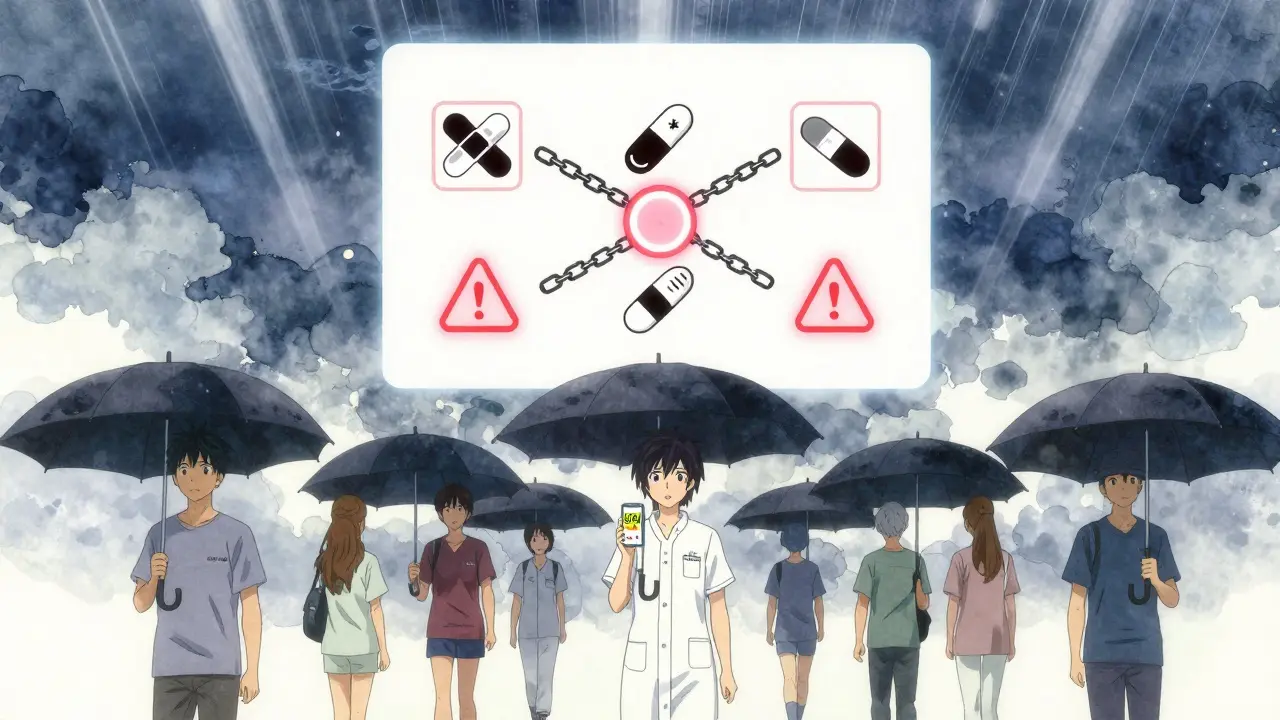
What’s New in Sun Protection
The field is evolving. In 2023, the FDA approved the first targeted photoprotective medication, Lumitrex, which reduces UV-induced skin damage by 70% in trials. Meanwhile, companies are developing “smart” sunscreens that change color when UV exposure gets dangerous.Genetic testing is also entering the picture. 23andMe now offers a photosensitivity risk panel that checks for gene variants linked to higher reaction risk. While not a replacement for caution, it can help you understand your personal vulnerability.
Why Doctors Often Miss This
It’s frustrating, but true: up to 70% of photosensitivity cases are misdiagnosed as regular sunburn or eczema. Most primary care providers don’t routinely ask about sun exposure when prescribing new meds. Only 35% of them use formal screening protocols - compared to 85% of dermatologists.That’s why you need to be your own advocate. When you’re prescribed a new drug, ask: “Can this make my skin more sensitive to the sun?” If they say no, ask again. If they’re unsure, request the FDA’s Sun Safety Medication Database or check the patient information leaflet.
Final Word: Don’t Guess. Protect.
Medication-related photosensitivity isn’t a minor inconvenience. It’s a real, under-recognized risk that can lead to lasting damage. You don’t need to avoid the sun forever - but you do need to be smarter about how you enjoy it.Use mineral sunscreen with zinc oxide. Wear UPF 50+ clothing. Check the UV index. Avoid peak sun hours. And never assume your doctor told you everything you need to know.
One simple question - “Could this drug make me more sensitive to the sun?” - could save you from weeks of pain, scarring, or worse.
Can you get photosensitivity from over-the-counter drugs?
Yes. Many common OTC medications can cause photosensitivity, including ibuprofen, naproxen, and even some topical creams like ketoprofen gel. Even some herbal supplements, like St. John’s wort, can trigger reactions. Always read the patient information leaflet that comes with any medication - if it mentions sun sensitivity, take it seriously.
How long does medication-induced photosensitivity last?
It depends on the drug. For most, the sensitivity fades within days or weeks after stopping the medication. But for others, like amiodarone, it can last for years - even decades. The drug accumulates in skin and fat tissue and releases slowly. If you’ve taken a high-risk drug long-term, assume you’re still at risk unless your doctor confirms otherwise.
Can sunscreen cause photosensitivity?
Yes. Some chemical sunscreen ingredients, especially oxybenzone and octocrylene, can act as photoallergens. If you develop an itchy, spreading rash after applying sunscreen, you might be reacting to the product itself. Switch to a mineral sunscreen with zinc oxide or titanium dioxide - these are less likely to trigger allergies.
Is photosensitivity the same as a sun allergy?
Not exactly. A true sun allergy, like polymorphic light eruption, happens without any medication. It’s an immune response to UV light alone. Medication-induced photosensitivity is triggered by the drug + UV combination. The symptoms can look similar, but the cause is different. A dermatologist can usually tell the difference with a detailed history and sometimes a photopatch test.
Can I still go outside if I’m on a photosensitizing drug?
Absolutely - but you need to be strategic. Avoid direct sun during peak hours (10 a.m. to 4 p.m.). Wear UPF 50+ clothing, a wide-brimmed hat, and UV-blocking sunglasses. Use mineral sunscreen with SPF 50+ and reapply every two hours. With these steps, you can enjoy outdoor time safely. Many people on long-term meds like doxycycline or amiodarone live active, outdoor lives - they just plan ahead.
Should I stop my medication if I get a sun reaction?
Never stop a prescribed medication without talking to your doctor. Some drugs, like amiodarone or certain antibiotics, are critical for your health. Instead, report the reaction immediately. Your doctor may switch you to a non-photosensitizing alternative, adjust your dose, or give you a detailed sun protection plan. Stopping suddenly can be dangerous.