
Privacy and Security at Online Pharmacies: How to Protect Your Data in 2025
 Dec, 5 2025
When you order medication online, you’re not just buying pills-you’re handing over your medical history, address, credit card, and sometimes even biometric data. It’s personal. And if the website isn’t secure, that information can end up in the hands of scammers, identity thieves, or worse-counterfeit drug sellers. In 2025, online pharmacy security isn’t optional. It’s a matter of life and death.
Why Most Online Pharmacies Are Risky
You’ve probably seen ads for cheap pills from websites with names like "GlobalMedsExpress" or "FastRx247." They promise discounts, no prescription needed, and overnight delivery. But here’s the truth: 96% of websites selling prescription drugs online don’t follow basic safety rules, according to the National Association of Boards of Pharmacy (NABP). That’s not a typo. Almost all of them. These sites don’t just sell fake medications-they steal your data. A 2025 Consumer Reports survey found that 29% of people who used unverified online pharmacies experienced some kind of data misuse. Some got scam emails referencing their prescriptions. Others received unsolicited calls within 24 hours of placing an order. One Reddit user shared how their insulin prescription led to a flood of telemarketers calling about "discounted heart meds." That’s not coincidence. That’s data leakage. Even worse, 78% of non-compliant online pharmacies don’t use proper encryption. That means your name, diagnosis, and payment details are floating around in plain text-easily grabbed by hackers. The DEA and HHS have warned that illegal online pharmacies are now the top source of prescription fraud in the U.S.What Makes an Online Pharmacy Safe?
Not all online pharmacies are dangerous. There’s a small group that follows strict rules-and they’re easy to spot. Look for two things: the VIPPS seal or the .pharmacy domain. VIPPS (Verified Internet Pharmacy Practice Sites) is a certification from NABP. To earn it, a pharmacy must pass 21 safety checks: licensed pharmacists on staff, real U.S. addresses, valid prescriptions required, and secure handling of health data. As of February 2025, only 68 U.S. pharmacies had this seal. That’s it. The .pharmacy domain is even stricter. To get it, pharmacies must prove they’re licensed in every state they operate in, have a physical location, and pass a 47-point security review. It’s not just a logo. It’s a digital fingerprint of trust. Compare that to the average online pharmacy: no physical address, no licensed pharmacist, no prescription check. And yet, most people can’t tell the difference. A 2025 survey showed only 12% of users could correctly identify a legitimate site.How Your Data Is Protected (When It’s Done Right)
Legitimate online pharmacies follow HIPAA’s Security Rule. That means they must use 256-bit AES encryption for your data when it’s stored, and TLS 1.3 when it’s being sent over the internet. That’s military-grade protection. Your prescription details aren’t just hidden-they’re locked with keys so complex that cracking them would take centuries with today’s tech. They also require multi-factor authentication (MFA) for every employee who accesses your records. That means a password plus a code sent to a phone or app. No exceptions. Passwords must be changed every 90 days. And every time someone looks at your file-pharmacist, clerk, IT person-it’s logged. Those logs are kept for at least six years. They also scan their systems for vulnerabilities every 30 days and run full security tests once a year. If something’s broken, they fix it before a hacker finds it. And here’s something most people don’t know: under the DEA’s new March 2025 rules, pharmacists must verify your identity using government-issued ID-sometimes with facial recognition-before filling any telemedicine prescription for controlled substances. That’s not just security. That’s accountability.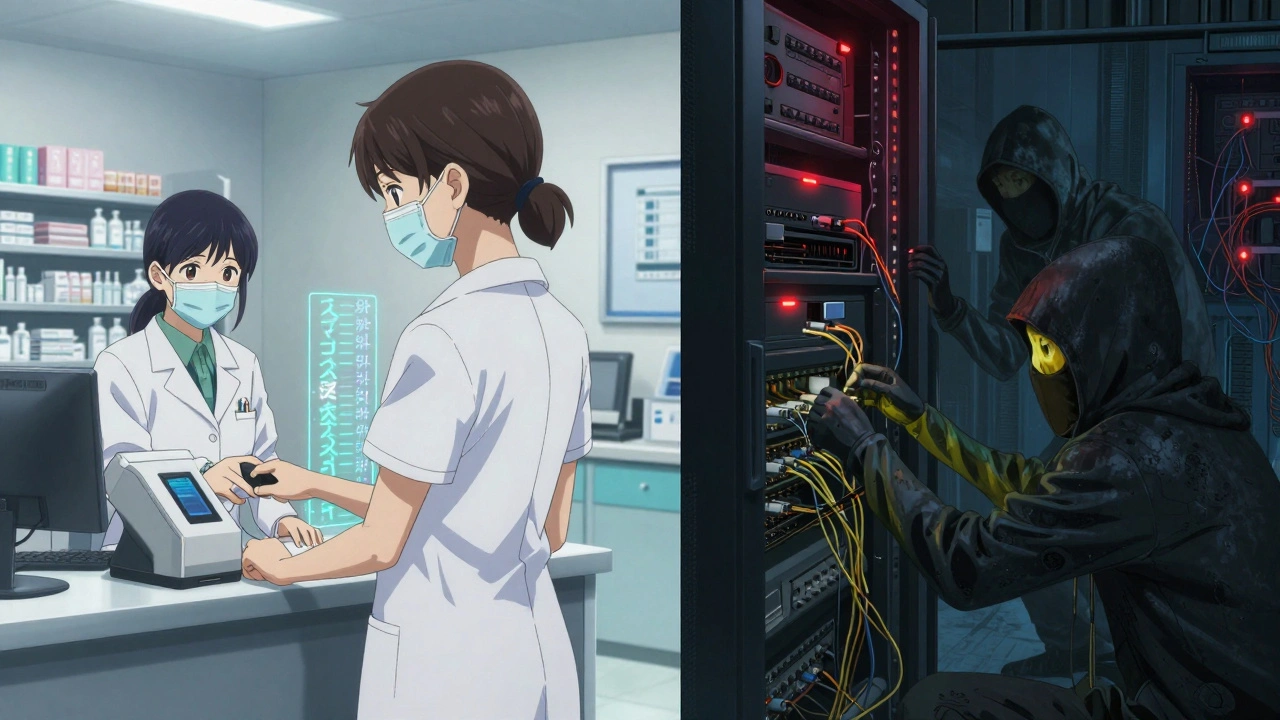
What to Do Before You Click "Checkout"
You don’t need to be a tech expert to stay safe. Here’s what to check before you enter your credit card:- Check the domain. Is it ending in .pharmacy? If not, walk away.
- Look for the VIPPS seal. Click it. It should link to NABP’s official verification page. Fake seals just redirect to the pharmacy’s homepage.
- Require a prescription. Any site that says "no prescription needed" is breaking the law-and putting you at risk.
- Find the physical address. Type it into Google Maps. Does it show a real pharmacy with a sign, parking lot, and staff? Or just a PO box?
- Check reviews. Look for mentions of privacy issues. If 40% of negative reviews talk about spam calls or data leaks, that’s a red flag.
- Use a burner email. Don’t use your main inbox. Create a free Gmail just for pharmacy orders.
- Avoid direct debit. Use a credit card, not a debit card. You have more protection if fraud happens.
The Hidden Cost of Convenience
It’s tempting to pick the cheapest option. But here’s what you’re really paying for:- Identity theft
- Medical fraud
- Counterfeit drugs that don’t work-or worse, poison you
- Unauthorized access to your health records
- Being targeted by scammers who know your condition
What’s Changing in 2025
The rules are tightening. New York now requires all prescriptions-controlled or not-to be sent electronically, cutting down on forged paper scripts by 37%. The DEA now demands real-time checks of state Prescription Drug Monitoring Programs (PDMPs) before any controlled substance is filled. The Federal Register also proposed new rules: all pharmacies must implement MFA for remote access by September 2025, and undergo third-party security audits by 2026. That’s a big deal. Smaller online pharmacies can’t afford the $10,000+ software upgrades. Many will shut down. The GPhC (UK’s pharmacy regulator) has also started prioritizing online pharmacy inspections, reducing the wait time from 12 months to just six. That means more rogue sites are getting caught faster. This isn’t just bureaucracy. It’s protection.Final Advice: Trust, But Verify
Convenience is great. But when your health is involved, speed should never come before safety. If a website feels too good to be true-cheap pills, no questions asked-it probably is. Stick to sites with the .pharmacy domain or VIPPS seal. Use a separate email. Pay with a credit card. Never skip the prescription step. And if you’re unsure, call your local pharmacist. They can tell you if a site is legit. Your data isn’t just information. It’s your medical history. Your diagnosis. Your future. Protect it like you would your home-because in 2025, your online pharmacy is the front door to your health.How do I know if an online pharmacy is real?
Look for the VIPPS seal from the National Association of Boards of Pharmacy or a website address ending in .pharmacy. Both mean the pharmacy has passed strict safety and licensing checks. Click the seal to verify it links to the official NABP site. Also check for a physical pharmacy address, a licensed pharmacist available for consultation, and a requirement for a valid prescription.
Can I trust online pharmacies that offer no-prescription medications?
No. Any website offering prescription drugs without a valid prescription is breaking U.S. law under the Ryan Haight Act. These sites are almost always illegal, unlicensed, and unsafe. They often sell counterfeit, expired, or contaminated drugs-and they harvest your personal data. Legitimate pharmacies always require a prescription from a licensed provider.
What encryption should a secure online pharmacy use?
A compliant online pharmacy must use 256-bit AES encryption for data at rest and TLS 1.3 for data in transit, as required by updated HIPAA Security Rule proposals in early 2025. These are industry-standard protections used by banks and government systems. If a site doesn’t mention encryption or uses outdated protocols like SSL or TLS 1.0, avoid it.
Why do I get spam calls after ordering from an online pharmacy?
If you start receiving unsolicited calls or emails about medications shortly after ordering, your data was likely stolen. Non-compliant pharmacies often sell or leak patient information to third-party marketers or fraud rings. Legitimate pharmacies are legally required to protect your health data under HIPAA and never share it for marketing without explicit consent.
Are .pharmacy websites safer than .com sites?
Yes. The .pharmacy domain is a verified, restricted top-level domain managed by the National Association of Boards of Pharmacy. Pharmacies must prove they’re licensed in every state they serve, have a physical location, and meet strict privacy and security standards before they can use it. A .com site might look professional, but it’s not verified. Always choose .pharmacy over .com for health-related purchases.
What should I do if I think my data was stolen from an online pharmacy?
Report it immediately. Contact the pharmacy’s customer service (if they have any) and file a complaint with the National Association of Boards of Pharmacy (NABP) and the Federal Trade Commission (FTC). Freeze your credit with the three major bureaus, monitor your bank statements, and consider signing up for identity theft protection. If you received counterfeit medication, contact your doctor and report it to the FDA’s MedWatch program.
Taya Rtichsheva
December 6, 2025 AT 16:14Christian Landry
December 8, 2025 AT 12:31Guylaine Lapointe
December 9, 2025 AT 08:29Sarah Gray
December 10, 2025 AT 22:26Katie Harrison
December 12, 2025 AT 17:34Darcie Streeter-Oxland
December 13, 2025 AT 19:13Michael Robinson
December 14, 2025 AT 05:22Kathy Haverly
December 14, 2025 AT 07:54Andrea Petrov
December 15, 2025 AT 09:25Graham Abbas
December 15, 2025 AT 21:33Andrea DeWinter
December 17, 2025 AT 02:20Suzanne Johnston
December 18, 2025 AT 08:43Haley P Law
December 18, 2025 AT 16:13Christian Landry
December 20, 2025 AT 14:46