
Single-Source vs Multi-Source Drugs: What Patients Need to Know About Cost, Effectiveness, and Choices
 Jan, 10 2026
When you pick up a prescription, you might not realize you’re choosing between two very different kinds of medicine. One is made by just one company - no other options exist. The other? Dozens of companies make it, and most of them cost far less. This isn’t just about labels or packaging. It’s about your wallet, your health, and whether your insurance will even cover what your doctor prescribed.
What Exactly Are Single-Source Drugs?
Single-source drugs are medications made by only one manufacturer. Usually, that’s the original brand-name company, and no generic version has been approved yet. These are often newer drugs still under patent protection - things like cutting-edge treatments for cancer, autoimmune diseases, or rare conditions. Because there’s no competition, the company sets the price. And it’s not cheap. The average monthly cost for a single-source drug is around $587, according to a 2022 Kaiser Family Foundation survey.
These drugs don’t have a therapeutic equivalence code in the FDA’s Orange Book - because there’s nothing to compare them to. If your doctor prescribes Humira or Enbrel, and you’re paying full price, you’re likely dealing with a single-source drug. Even if a generic version eventually comes out, until then, you’re stuck with one option - and one price tag.
What Are Multi-Source Drugs?
Multi-source drugs are the opposite. They’re medications that have both a brand-name version and at least one generic version approved by the FDA. Think of drugs like lisinopril for high blood pressure, metformin for diabetes, or atorvastatin for cholesterol. You might see them sold under names like Lipitor (brand) or atorvastatin (generic). But here’s the key: dozens of companies can make the generic version, and they all have to prove they work the same way.
The FDA requires generics to have the same active ingredient, strength, dosage form, and route of administration as the brand. They also must be bioequivalent - meaning they absorb into your body at nearly the same rate and level. The acceptable range? Between 80% and 125% of the brand’s performance. That’s not a loophole. It’s a strict standard.
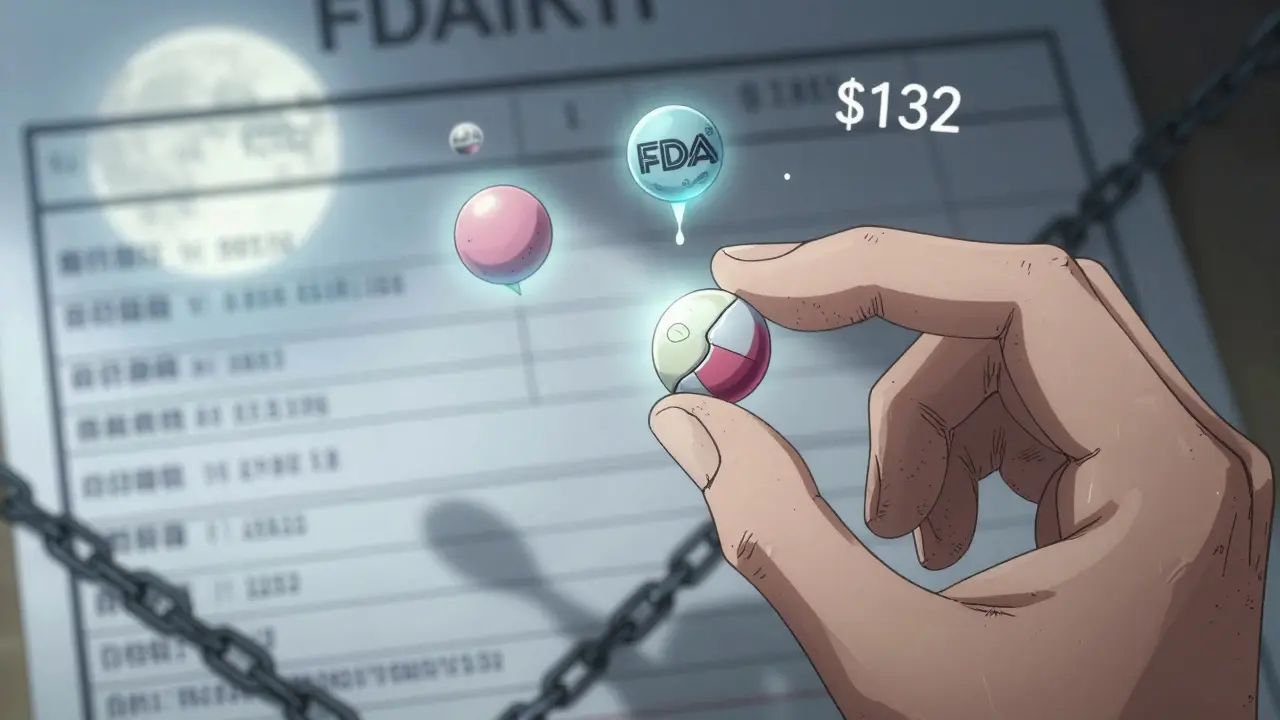
And because there’s competition, prices drop. On average, multi-source drugs cost just $132 per month. That’s more than 75% cheaper than single-source drugs. About 86% of all prescriptions filled in the U.S. are for multi-source drugs - but they make up only 23% of total drug spending.
Why Do Prices Differ So Much?
It’s not just about production costs. It’s about how the system works.
For single-source drugs, manufacturers have full control. When they raise the list price, they often get a bigger rebate from pharmacy benefit managers (PBMs) - the middlemen between insurers and pharmacies. That means a $1 increase in list price usually leads to a $1 increase in rebate. The net price - what the insurer actually pays - stays steady. But your out-of-pocket cost? It might go up if your plan uses list price to calculate your copay.
With multi-source drugs, it’s different. When one generic maker lowers its price, others have to follow. So when rebates go up, list prices don’t always follow. In fact, net prices often go down. That’s why insurers push for generics. They save money - and they pass some of those savings to you.
But here’s the catch: insurers don’t always pay the lowest price. They use something called Maximum Allowable Cost (MAC), which is the most they’ll reimburse for a generic. MAC is typically 50-60% below the brand’s average wholesale price. If your pharmacy’s cost for a generic is higher than the MAC, you pay the difference.
Are Generics Really the Same?
Legally? Yes. Medically? Almost always.
The FDA says generics are therapeutically equivalent to brand-name drugs. That means they should work the same way, with the same risks and benefits. And for most people, they do.
But some patients report differences. On Drugs.com, 68% of negative reviews for generic drugs mention inconsistent effectiveness between different manufacturers. One person might take a generic made by Teva and feel fine. Another takes the same drug from Mylan and notices side effects or reduced effect.
Why? Even though the active ingredient is identical, the inactive ingredients - like fillers, dyes, or coatings - can vary. For most drugs, that doesn’t matter. But for medications with a narrow therapeutic index - like warfarin, levothyroxine, or certain seizure drugs - tiny differences can matter. That’s why pharmacists are told to notify you if your generic switches manufacturers. It’s not because the new version is unsafe. It’s because your body might react differently to a new formulation.
What Does This Mean for Your Insurance?
Your insurance plan probably has a formulary - a list of drugs it covers and at what cost. Single-source drugs are often on the highest tier. That means higher copays or coinsurance. You might even need prior authorization just to get it covered.
Multi-source drugs? They’re usually on the lowest tier. Sometimes, your plan won’t cover the brand-name version at all unless you’ve tried the generic first. That’s called step therapy. And it’s common.
But here’s something few patients know: some PBMs create “single-source generics.” That’s when one generic manufacturer gets exclusive rights to supply a drug for a certain insurer. Even though there are other generics available, you only get one - and it might not be the cheapest. Truveris found in 2022 that these arrangements can make “generic” drugs almost as expensive as the brand.
What Should You Do as a Patient?
Don’t assume your prescription is fixed. Ask questions.
- Ask your doctor: “Is there a generic version of this drug?” If they say no, ask why. Is it because no generic exists - or because your plan won’t cover it?
- Ask your pharmacist: “Did my generic change today?” If you notice a new pill shape, color, or name on the bottle, ask if it’s the same drug. If you’ve had side effects or felt less effective, tell them. They can often switch you back to the previous manufacturer.
- Check your formulary: Log into your insurance portal. Look up your drug. See what tier it’s on. See if there’s a cheaper alternative.
- Use the FDA’s Orange Book: Search for your drug. If you see an “A” code, it means it’s rated as therapeutically equivalent to the brand. That’s your green light.
And if you’re paying a lot - especially for a drug that’s been around for years - you’re probably overpaying. The FDA estimates that generics saved Americans $1.7 trillion between 2010 and 2020. That money could be going to you.
What’s Changing Right Now?
The landscape is shifting fast. In 2023, Humira - a $2,000-a-month single-source drug - finally lost its exclusivity. Now, 14 different generic versions are on the market. That’s a game-changer.
The FDA’s new Generic Drug User Fee Amendments (GDUFA III), launched in 2023, aim to cut approval times for generics from 18 months to 10 months by 2025. That means more single-source drugs will become multi-source - faster.
But pharmaceutical companies aren’t giving up. Some release their own “authorized generics” - the brand-name company sells the same drug under a generic label. It’s still the same pill, but it keeps them in control of pricing.
Meanwhile, the Inflation Reduction Act now penalizes drugmakers for raising prices on single-source drugs faster than inflation. That’s a new pressure point. And it’s already starting to change behavior.
Bottom Line: Know Your Options
Not all drugs are created equal - and not all prescriptions have to cost a fortune. Most medications you take are multi-source. That means you have choices. You have power. You just need to know how to use it.
Don’t accept the first pill you’re handed. Ask if there’s a cheaper version. Ask if your insurance will cover it. Ask if your pharmacist switched your generic. These small steps can save you hundreds - or even thousands - a year.
And if your doctor says, ‘This is the only option’ - ask why. Sometimes, it’s true. But more often, it’s just how the system is set up. You don’t have to play by rules that don’t work for you.
Are generic drugs really as effective as brand-name drugs?
Yes, for most people. The FDA requires generics to have the same active ingredient, strength, and dosage form as the brand. They must also prove they’re bioequivalent - meaning they work in your body at nearly the same rate and level. Over 90% of patients experience no difference. But for drugs with a narrow therapeutic index - like warfarin or thyroid medication - even small changes in formulation can matter. If you notice new side effects after switching, talk to your pharmacist.
Why does my generic drug look different every time I refill it?
Because different manufacturers make the same generic drug. Each company uses different inactive ingredients - like dyes or fillers - which can change the pill’s color, shape, or size. The active ingredient stays the same, so it should work the same. But if you’ve had a bad reaction or feel it’s less effective, your pharmacist can often refill your prescription with the same manufacturer. Just ask.
Can my insurance force me to take a generic?
Yes, if your drug has a generic version. Many insurance plans require you to try the generic first before covering the brand-name drug. This is called step therapy. If the generic doesn’t work for you - or causes side effects - your doctor can request an exception. You’ll need a letter explaining why the brand is medically necessary.
Why are single-source drugs so expensive?
Because there’s no competition. The manufacturer controls the price and often raises it to increase rebates paid by pharmacy benefit managers. These rebates don’t usually lower your out-of-pocket cost - they just help insurers save money. That’s why single-source drugs cost, on average, $587 per month, while generics cost $132. The system rewards higher list prices, not lower patient costs.
How do I find out if my drug is single-source or multi-source?
Ask your pharmacist or check the FDA’s Orange Book online. If your drug has an ‘A’ code next to it, it’s multi-source and has generic equivalents. If it has no code, it’s likely single-source. You can also search your drug name on your insurance plan’s formulary - if only the brand is listed, it’s probably single-source.
What to Do Next
If you’re taking a long-term medication, especially one you’ve been on for years, take 10 minutes this week to check your options. Call your pharmacy. Ask if your drug is available as a generic. Ask if your insurer covers it. Ask if your last refill came from a different manufacturer.
Even small changes - like switching from a $400 brand to a $40 generic - can free up money for food, rent, or other health needs. You’re not just saving money. You’re taking control of your care.
The system isn’t perfect. But you’re not powerless. You just need to ask the right questions.