
Traveling With Diabetes: The Ultimate Packing Guide for Insulin, CGM Sensors, and Supplies
 Nov, 29 2025
Traveling with diabetes isn’t about limiting your adventures-it’s about being ready for anything.
You’ve booked the flight, packed your clothes, and planned the itinerary. But if you live with diabetes, there’s one more crucial step: making sure your medical supplies won’t fail when you’re far from home. Whether you’re flying across the country or hiking in the mountains abroad, a single missed dose or dead CGM sensor can turn a dream trip into a medical emergency. The good news? With the right plan, you can travel safely, confidently, and without constant worry.
According to the American Diabetes Association, insulin must always go in your carry-on. Checked baggage can drop below freezing or spike over 100°F in cargo holds-either way, your insulin becomes ineffective. A 2021 study in the Journal of Diabetes Science and Technology found that exposure to extreme temperatures reduces insulin potency by up to 30%. That’s not a risk you can afford.
Insulin: Bring Twice as Much as You Think You’ll Need
Rule number one: never pack just enough insulin for your trip. Always bring double. Why? Flight delays, lost luggage, or a pump malfunction can happen anywhere. One Reddit user, 'PumpProblems,' got stranded on a remote trail in Costa Rica when their pump failed. They didn’t bring backup syringes. They ended up in an emergency room.
If you use insulin pens, pack at least two full sets of pens and cartridges. If you use vials and syringes, bring extra syringes, alcohol wipes, and a small cooler with ice packs. Even if you’re only gone for three days, pack for five. And don’t forget to check the expiration dates on every vial or pen before you leave.
Temperature matters. Insulin works best between 40°F and 86°F. In hot climates or during long flights, use a Frio Insulin Cooling Sleeve. It’s reusable, lightweight, and keeps insulin cool for up to 45 hours without ice. Many travelers swear by it-61% of users in a 2022 Cottage Health survey called it “essential.” For longer trips, Novo Nordisk’s Tresiba U-200 is now FDA-approved for room-temperature storage for up to eight weeks. If you’re switching insulins, confirm your doctor’s guidance first.
CGM Sensors and Transmitters: Pack Spares, Adhesives, and Backups
Your CGM isn’t just a convenience-it’s your lifeline. But sensors fail. Transmitters die. Adhesives peel off during sweat, showers, or swimming. You need backups.
For a week-long trip, bring at least three sensors and one extra transmitter. Dexcom and Abbott both report that 12-15% of travelers experience sensor failure mid-trip. That’s not rare-it’s expected. Don’t wait until your sensor stops working to realize you’re out of spares.
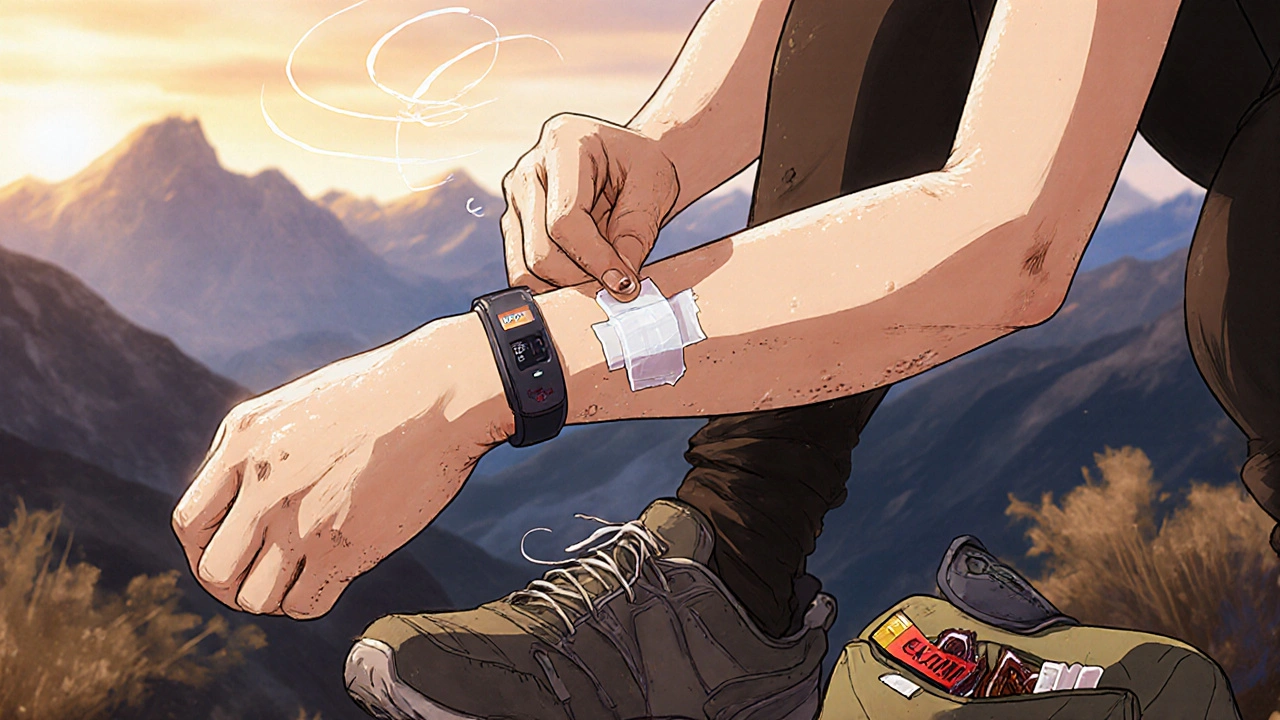
Use Skin Grip CLEAR tape or similar waterproof adhesive strips to keep sensors stuck down during physical activity. Many travelers skip this until they’re mid-hike and their sensor falls off. Then they’re stuck with a CGM that reads nothing. A $10 roll of tape can save you from a panic.
Always carry a backup blood glucose meter and test strips. Even the best CGMs can give false readings. Before you leave, compare your meter’s reading with your CGM. If they’re off by more than 15%, recalibrate or replace the meter. Pack at least 50% more strips than you think you’ll need. One traveler told Diabetech.info they used 72 strips on a five-day trip because they were checking every two hours to stay safe.
Insulin Pumps: Have a Plan B
If you use an insulin pump, you’re already ahead of the game-but you still need a backup. Tandem Diabetes Care and Insulet both offer free loaner pump programs if yours breaks while you’re overseas. Call them before you leave and get the details in writing.
Also pack:
- Two to three extra infusion sets
- Three to five empty reservoirs
- A full set of syringes and insulin vials
- Extra batteries (check your pump’s model for the exact type)
Some people think, “I’ll just use injections if the pump fails.” But if you haven’t used syringes in years, you’ll be fumbling in an airport bathroom at 3 a.m. Practice injecting with your backup kit before you leave. Know your insulin-to-carb ratio and correction factor by heart-or write them down.
Snacks and Low Treats: Ditch the Glucose Tablets
Glucose tablets? They’re bulky, messy, and taste like chalk. Most travelers who’ve been doing this for a while switch to fruit leathers. Pure Organic Fruit Leathers weigh half an ounce each, fit in a pocket, and raise blood sugar fast without a sugar crash.
Diabetech.info’s 2023 survey found travelers using fruit leathers had 37% fewer low-blood-sugar emergencies on the go. Pack at least four per day-more if you’re active. Also carry:
- Granola bars (check labels for carbs)
- Trail mix with nuts and dried fruit
- Apple sauce pouches
- Juice boxes (not diet)
Keep snacks in multiple places: one in your carry-on, one in your daypack, one in your coat pocket. You never know when you’ll need them.
Documentation: The One Thing Everyone Forgets
Dr. Anne Peters, Director of USC’s Clinical Diabetes Programs, says the most overlooked item in diabetes travel is a doctor’s letter. Not a prescription. Not a note from your pharmacy. A real letter.
Your doctor’s letter should include:
- Your diagnosis (Type 1 or Type 2)
- Your daily insulin dose
- Your insulin-to-carb ratio
- Your correction factor
- Emergency contact info
- A list of all devices (pump, CGM, meter)
Print two copies. Keep one in your wallet and one in your carry-on. This isn’t just for security-it’s for foreign hospitals. Many countries don’t recognize U.S. prescriptions. A doctor’s letter can get you insulin fast if you’re stranded.
Also carry a TSA Disability Notification Card. It’s free to download from diabetes.org. It tells security you have a medical condition and need to carry supplies. Travelers with this card report 42% fewer delays at checkpoints.
Security and Air Travel: Know Your Rights
TSA allows all diabetes supplies through security-no exceptions. But you must declare them. Don’t just toss your insulin bag into your carry-on and hope for the best.
Here’s what works:
- Keep all diabetes supplies in a clear, sealable plastic bag.
- Separate that bag from your other liquids and electronics.
- Have your doctor’s letter and TSA card ready.
- Don’t let them X-ray your insulin. Ask for a hand inspection.
Insulin pumps and CGMs can go through the X-ray, but you can request a pat-down instead. Some travelers say the X-ray damages sensors over time. If you’re unsure, ask for a manual check.
Pro tip: 28% faster security processing happens when supplies are in a clear, labeled bag. Label it: “Diabetes Medical Supplies - Do Not X-Ray Insulin.”

International Travel: Watch the Insulin Concentration
Most countries use U-100 insulin-the same as the U.S. But some, especially in parts of Asia and Eastern Europe, use U-40 or U-80. If you accidentally use the wrong concentration, you could overdose.
Before you go, research your destination’s insulin standards. Pack extra U-100 insulin from home. Never buy insulin abroad unless you’re 100% sure of the concentration. Beyond Type 1 has documented cases of travelers ending up in ICU because they used local insulin without knowing the difference.
Also, check if your CGM works overseas. Dexcom and Abbott devices use Bluetooth, which works globally. But some countries have different Wi-Fi or cellular networks. Make sure your phone can connect to your sensor.
Time Zones and Schedules: Adjust Your Routine
Changing time zones affects your insulin timing. Crossing three time zones? Plan 15-20 minutes of adjustments per zone. For example, if you usually take basal insulin at 10 p.m. and you’re flying east, you’ll need to take it earlier each day.
Use your CGM’s trend arrows. If your glucose is dropping fast, delay your next meal. If it’s rising, consider a correction bolus. Don’t stick rigidly to your home schedule. Let your body guide you.
Set alarms on your phone for insulin doses, meals, and glucose checks. Even if you’re jet-lagged, don’t skip them.
Final Checklist: What to Pack
Here’s your no-fluff, no-miss checklist:
- Double the insulin you’ll need (pens, vials, syringes)
- Three CGM sensors + one extra transmitter
- Five extra test strips per day of travel
- Backup glucose meter and batteries
- Skin Grip CLEAR tape or similar adhesive
- Frio cooling sleeve (or Tresiba U-200 insulin)
- Four fruit leathers per day
- Two extra infusion sets and reservoirs (if on pump)
- Doctor’s letter with care plan
- TSA Disability Notification Card
- Emergency contact list (including your endocrinologist)
- Travel insurance that covers diabetes emergencies
Store your main supplies in your carry-on. Keep a secondary set in checked luggage-except insulin. That stays with you.
What to Do If Something Goes Wrong
Lost your insulin? Call your pump company’s 24/7 support line. They’ll ship you a loaner.
CGM died? Use your meter. If you’re out of strips, ask at a local pharmacy for glucose test strips. Most will sell them without a prescription.
Low blood sugar and no snacks? Ask for juice, fruit, or candy at any airport or hotel. No one will refuse. Diabetes is a medical emergency everywhere.
Don’t panic. You’ve planned for this. You’ve packed for it. You’ve practiced. You’re ready.
Can I bring insulin through airport security?
Yes. The TSA allows all diabetes supplies, including insulin, syringes, pumps, and CGMs, through security. Insulin must be in your carry-on, not checked luggage. Declare your supplies and separate them in a clear bag. Request a hand inspection for insulin to avoid temperature damage.
How much insulin should I pack for a trip?
Pack at least double the amount you think you’ll need. For example, if you use 30 units per day on a five-day trip, bring enough for 10 days. This covers delays, lost luggage, or pump failures. Always include backup syringes and vials, even if you use a pump.
Do I need a doctor’s note to travel with diabetes supplies?
Not legally required in the U.S., but highly recommended-especially internationally. A doctor’s letter explaining your condition, insulin doses, and devices can help you get supplies quickly if you’re stranded. Include your insulin-to-carb ratio and emergency contacts.
Can I bring glucose tablets on a plane?
Yes. But many travelers prefer fruit leathers because they’re lighter, tastier, and easier to carry. Glucose tablets are fine, but they take up more space and can melt in heat. Pack a mix of options: tablets, juice boxes, and fruit leathers for variety.
What if my CGM stops working mid-trip?
Switch to your backup glucose meter immediately. Test your blood sugar every two hours until you get a new sensor. Keep extra test strips and lancets in your daypack. If you’re abroad, ask a local pharmacy for test strips-they’re usually available without a prescription.
Is it safe to fly with an insulin pump?
Yes. Insulin pumps are safe to fly with. You can go through the metal detector or X-ray machine with it on. But if you’re concerned, request a pat-down. Always carry backup supplies in case the pump fails. Many manufacturers offer free loaner pumps if yours breaks overseas.
Lauryn Smith
December 1, 2025 AT 00:46Bonnie Youn
December 2, 2025 AT 02:27Edward Hyde
December 2, 2025 AT 20:26Charlotte Collins
December 3, 2025 AT 13:54Margaret Stearns
December 5, 2025 AT 02:27Scotia Corley
December 5, 2025 AT 22:01elizabeth muzichuk
December 6, 2025 AT 20:24Debbie Naquin
December 8, 2025 AT 10:18Karandeep Singh
December 9, 2025 AT 18:31Mary Ngo
December 10, 2025 AT 22:34James Allen
December 12, 2025 AT 05:52Kenny Leow
December 12, 2025 AT 10:46